
Theatre has always reflected the moment in which it exists. On a broad cultural level, it responds to the pressures and rhythms of the world around it. On a smaller, practical level, it reflects the structures that sustain it: production models, communication norms, and the complex systems that hold a performance together night after night.
When those structures shift, the reflection shifts with them.
Recent updates to Equity production contracts are part of a broader recalibration taking place across the industry. While Broadway may be the most visible arena for these shifts, their implications rarely remain confined there––regional and community theatres feel the effects in subtler but no less consequential ways.
A clear illustration of this is the elimination of the long-established requirement for program inserts. For decades, the insert has served a singular function: to clearly and immediately inform the audience of a change when a cast member is absent.
But the insert is more than just a reporting mechanism. It celebrates the artists who keep a production alive when circumstances shift. Understudies, standbys, alternates, and swings may not often appear on the marquee, but they carry the immense responsibility of ensuring that the show, as it must, goes on. That small slip of paper inside of a paper program acknowledges that work, capturing a unique moment and holding it to the light.
The insert has never been particularly convenient for producers, requiring last-minute printing, program stuffing, and distribution. But it performs an important act of recognition, ensuring that the audience knows the truth of the moment unfolding before them.
Without that mechanism, something subtle begins to erode.
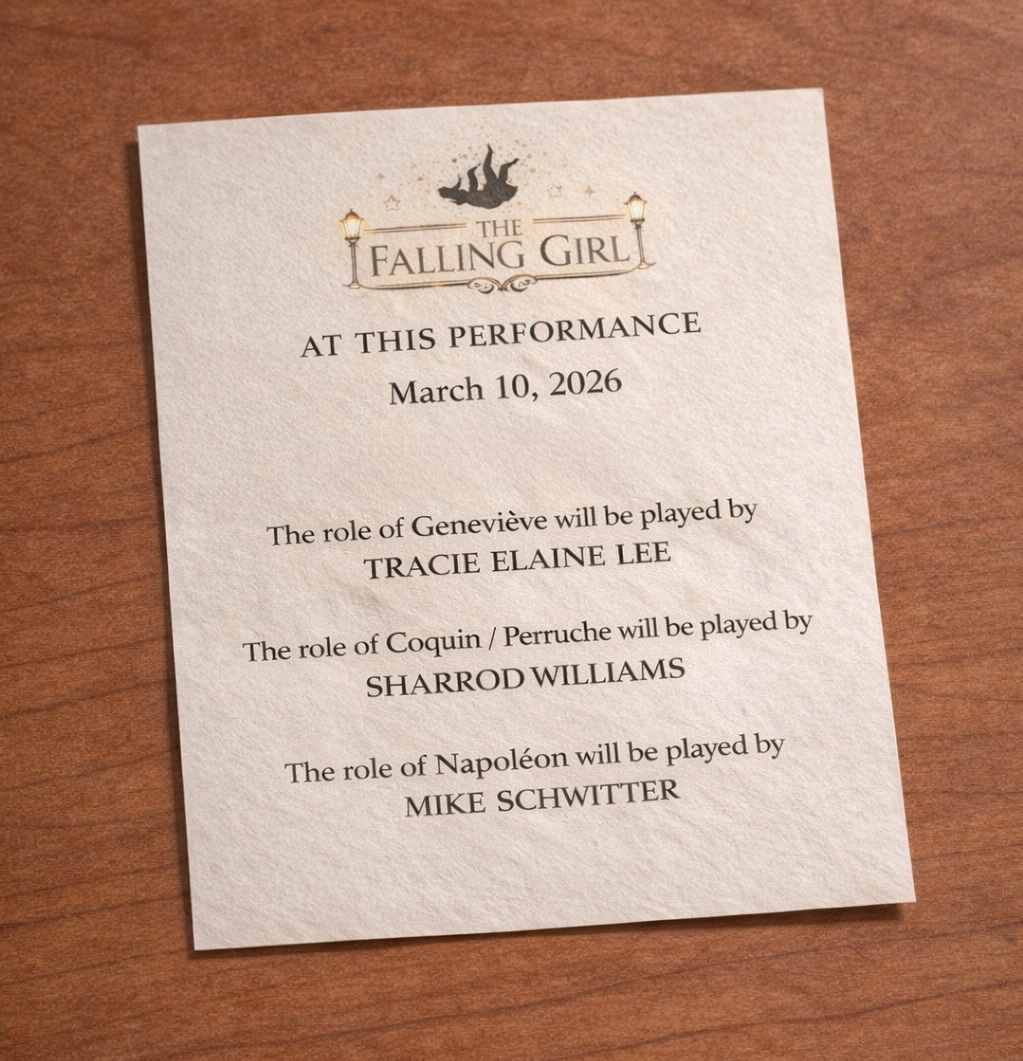
The printed program still presents itself as a record of the performance. Audiences assume that the names they see reflect the reality of the stage. When changes occur (and in live theatre, they frequently do), the program can quietly drift from documentation into approximation––or worse, misrepresentation.
Today, some productions have begun including small QR codes directing audiences to cast updates. An elegant solution, but often barely visible, occupying no more than a few square centimeters on the page. Many audience members do not notice them, and even fewer understand that the information contained therein supersedes that which they hold in their hands.
At the same time, the broader environment surrounding theatre has accelerated dramatically. Marketing cycles move faster. Announcements travel instantly across social platforms. The audience arrives informed, curious, and accustomed to immediacy. What they encounter in the theatre, however, is often slower to adjust.
This tension creates an unusual gap. The stage is live, singular, and responsive to the moment, while the documentation around it can struggle to keep pace.
When formal mechanisms fall away, the industry has often responded by building new standards collectively. Theatre artists and producers have always done this—quietly establishing shared practices that protect clarity for audiences and recognition for performers and creatives. The current cast ledger offers one such opportunity.
If QR-based updates are to replace the traditional insert, they must be treated not as a technical afterthought but as part of the paper program’s primary architecture. The information must be visible, intuitive, and clearly understood as the authoritative record of who is performing that night. Furthermore, a concerted effort must be made to educate the audience on how to use it and why it's the definitive source of truth. If patrons are accustomed to looking for a printed insert—or not looking for any update at all—they are likely to overlook even the most well-designed digital solution. Education bridges the gap between having the technology and achieving its intended use.
Theatre has always been defined by ephemerality. Each performance exists as a singular moment in time, and then disappears into the subjective memory of its audience. Yet this fleeting nature is precisely why documentation matters. The program serves as an anchor to a specific moment. It answers a simple question that every theatre-goer instinctively asks:
Who am I seeing tonight?
When the structures that once carried that information disappear, new ones must emerge.
The challenge is not simply to replace the insert with a digital equivalent, but to preserve what the insert represents: a gesture of clarity for the audience and a gesture of recognition for the artists whose work sustains the production. Any alternative must do both, and do so visibly.
Tools, in this context, should absorb complexity rather than amplify it. They should provide a stable point of reference even as the surrounding environment accelerates. If theatre reflects the time in which it exists, the systems that support it must evolve as well—without sacrificing care, trust, or visibility.
Because the responsibility has not shifted.
Audiences still arrive with a simple expectation: that the program they hold reflects the performance they are about to witness. Artists still deserve to have their work recognized when circumstances ask them to step forward. And the institutions that steward this work still bear the obligation of holding those truths together.
The insert once carried that responsibility in a small and practical way. The form may change, but the principle cannot.

Be the first to read our articles.


LAND ACKNOWLEDGEMENT:
Marquee Digital, LLC resides in the ancestral homelands of the Munsee Lenape and Wappinger Peoples. We honor the history of this land and its people, and continue to grow our awareness of the ongoing consequences of colonialism and oppression still unfolding in our society. We commit to supporting and celebrating the life, work, and spirit of the Indigenous stewards of this land, and hold ourselves accountable to carry on the legacy of their careful stewardship with honor, integrity, and allegiance.

.jpg)