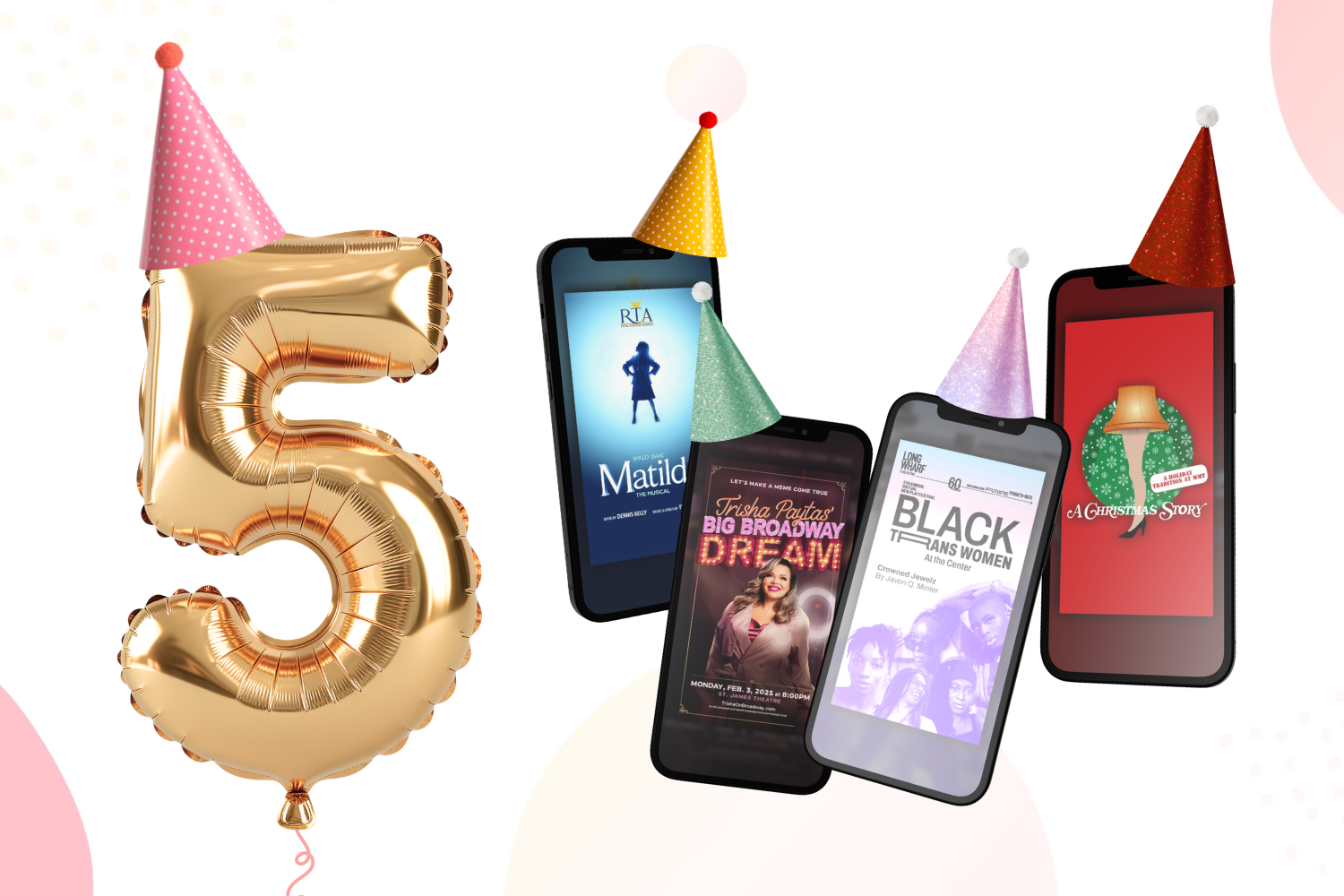
In late March of 2021, the world was still attempting to regain its balance against the reverberations of a global pandemic. After more than a year of darkened stages, the return to theatre was intermittent and uneven, moving forward in fits and starts as arts organizations found their footing on an uncertain path. Audiences were cautious, budgets were strained, and the practical realities of gathering people together—once the foundation of the form—required careful reconsideration.
And yet, alongside that uncertainty, something else was taking shape. Theatres were not only reopening; they were rethinking. Conversations that had once felt theoretical became immediate: how to reach audiences differently, how to extend the life of a production, how to build connections that could exist both inside and beyond the theatre.
It was within this moment that Marquee Digital began to take shape.
What began as a practical question—how to share a theatrical program without passing it from hand to hand—quickly opened into something more layered. The format was only one part of the problem. Beneath it was a broader opportunity to reconsider how information moves, how audiences engage, and how a production connects to the community around it.
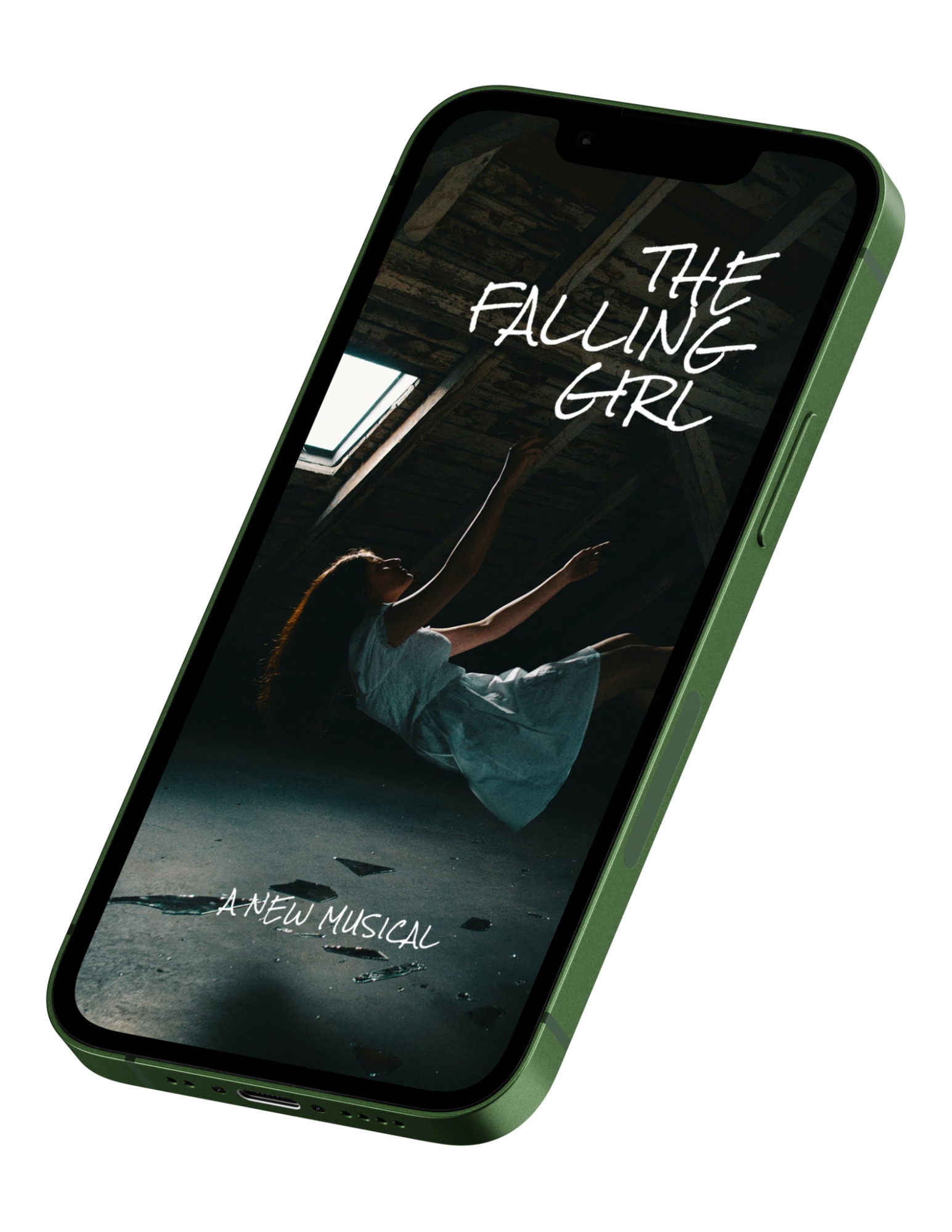
The very first Marquee, our original product demo, was built in under ten days for a playfully devised musical called The Falling Girl. The design was intentionally streamlined and clean, with a focus on clarity and audience experience, translating the structure of a traditional paper program into an elegant and intuitive digital-native format.
Even in those first ten days, the direction of the work had become clear.
The program no longer needed to be just a container for information. It could evolve into a point of connection—between artist and audience, between theatre and community, between the work onstage and the world around it. It also opened the door to considerations that had long existed at the edges of the format: how to make programs more accessible to a wider range of audiences, and how to reduce the material and financial costs associated with producing them at scale. What began as a replacement for paper quickly started to grow into something that could sit alongside it—maintaining those connections and, in some cases, extending them.
The vision was there from the start. The technology, however, took a little longer to catch up.
Marquee Digital’s early system lived in Google Sheets and Google Docs. Information moved back and forth through long email threads—bios, credits, sponsor placements, program notes—each version shaped through close coordination between our team and theatre staff. It was not uncommon for a single production to involve dozens—sometimes hundreds—of messages. The work was thoughtful and collaborative, but it depended on a level of repetition that was difficult to sustain.
Much of what we learned during that time came directly from the teams doing that work—from the ways they organized information, the questions they asked, the adjustments they made to keep everything aligned, and the steady stream of ideas that often began with, “It would be really awesome if . . . .” Each point of friction clarified what the system needed to become, and over time, we built a platform shaped by the needs of the people who would ultimately use it.
In 2023, we launched our self-serve client dashboard. Within it, information could be entered once and carried forward, reducing the need to rebuild the same materials from one production to the next. Programs could be updated in real time, with last-minute cast changes and corrections reflected within seconds, rather than held for a future version. Artists could build and maintain their own profiles, easing the ongoing work of collecting headshots and bios that so often falls to administrative teams.
What changed in practice was not only efficiency, though that was certainly part of it. The reduction in back-and-forth and the removal of redundant steps created space. For some of our longest-standing partners, the financial impact has deepened over time, with savings growing from early reductions of around twenty-five percent to as much as seventy-five percent today.
Along the way, our work has traveled farther than we might have expected. More than 700,000 Marquees have now been opened across international, livestreamed, and hybrid productions, reaching audiences in over 180 countries and documenting and celebrating the work of more than 1,300 artists. That reach has been shaped by the theatres, producers, and artists who chose to build alongside us—many of whom are exploring new intersections between the arts and technology, and in doing so, expanding what both can offer.
Looking back, the pattern is consistent.
A constraint appears.
A question follows.
The work expands.
The dimensions of the problem have certainly evolved, as has our perspective on it. But while our solutions become more layered, more interconnected, and more reflective of how theatre operates in practice, the underlying direction remains the same.
Our work has always been about connection. About placing theatre at the center of a broader ecosystem: one that includes audiences, artists, and the communities that gather around them. As we look toward the next five and ten years, that orientation remains in place.
Our work continues to unfold in response to the field itself, shaped by the evolving needs of theatres and their audiences. As conditions change—whether through shifts in audience behavior, production models, or the continual transformation of once-familiar formats—new questions emerge, and with them, new opportunities to rethink how the work is held and shared. In the coming weeks, we’ll begin to introduce the next phase of that work, incremental steps situated within a much longer trajectory; one defined by continuous growth, careful refinement, and an ongoing effort to expand the platform’s ability to support live theatre and deepen the connections that bring it to life.
The questions have not stopped—they have simply continued to open outward, and Marquee Digital continues to follow wherever they may lead.

Be the first to read our articles.


LAND ACKNOWLEDGEMENT:
Marquee Digital, LLC resides in the ancestral homelands of the Munsee Lenape and Wappinger Peoples. We honor the history of this land and its people, and continue to grow our awareness of the ongoing consequences of colonialism and oppression still unfolding in our society. We commit to supporting and celebrating the life, work, and spirit of the Indigenous stewards of this land, and hold ourselves accountable to carry on the legacy of their careful stewardship with honor, integrity, and allegiance.

.jpg)