
The theatrical program has always lived in a curious space.
It is practical, yes, but also ceremonial. It is both a document and a keepsake, something you hold while you wait with anticipation for the lights to dim and, sometimes, something you tuck away long after the set has been struck. It is simultaneously Baedeker and souvenir, telling you who made the work and how, while quietly memorializing the fact that you were witness to it.
For generations, the theatre program’s form has changed very little. These paper booklets reliably did what they were meant to do: they named the artists, acknowledged the supporters, oriented the audience, and offered a tangible record of the evening. What has changed is the world those programs continue to inhabit.
The pandemic did not create the pressures surrounding printed programs (some welcome, some not), but it made them nearly impossible to ignore. Costs rose; timelines compressed; accessibility expectations sharpened. Theatre productions learned to embrace a more fluid, responsive model––a model more alive to change––and the traditional program struggled to keep up.
What emerged was not a mandate to abandon tradition, but an invitation to rethink it.
Digital programs offer theatres a way to honor the purpose of the program while releasing it from its manifold constraints.
They allow information to remain accurate when circumstances shift. They invite audiences to engage more deeply, and in a fashion contemporary with their day-to-day lives. They create space for accessibility to be intentional, not improvised––or worse, ignored. They build upon the analogue idea, and expand the boundaries of what a program can be.
Without the limitations of page counts and printing deadlines, digital programs can capture and amplify the full constellation of people behind the production. They make room for artists, creatives, and collaborators whose work has often been condensed or omitted for the sake of space. They acknowledge donors and sponsors clearly, linking audiences directly to the organizations and individuals who help make the work possible, and allowing those relationships to extend beyond the page. They connect audiences to the theatre’s broader mission, to future productions, and to the local community in ways that feel native to how people already navigate information and culture today. Perhaps most meaningfully, they don’t wind up in the trash when the house empties.
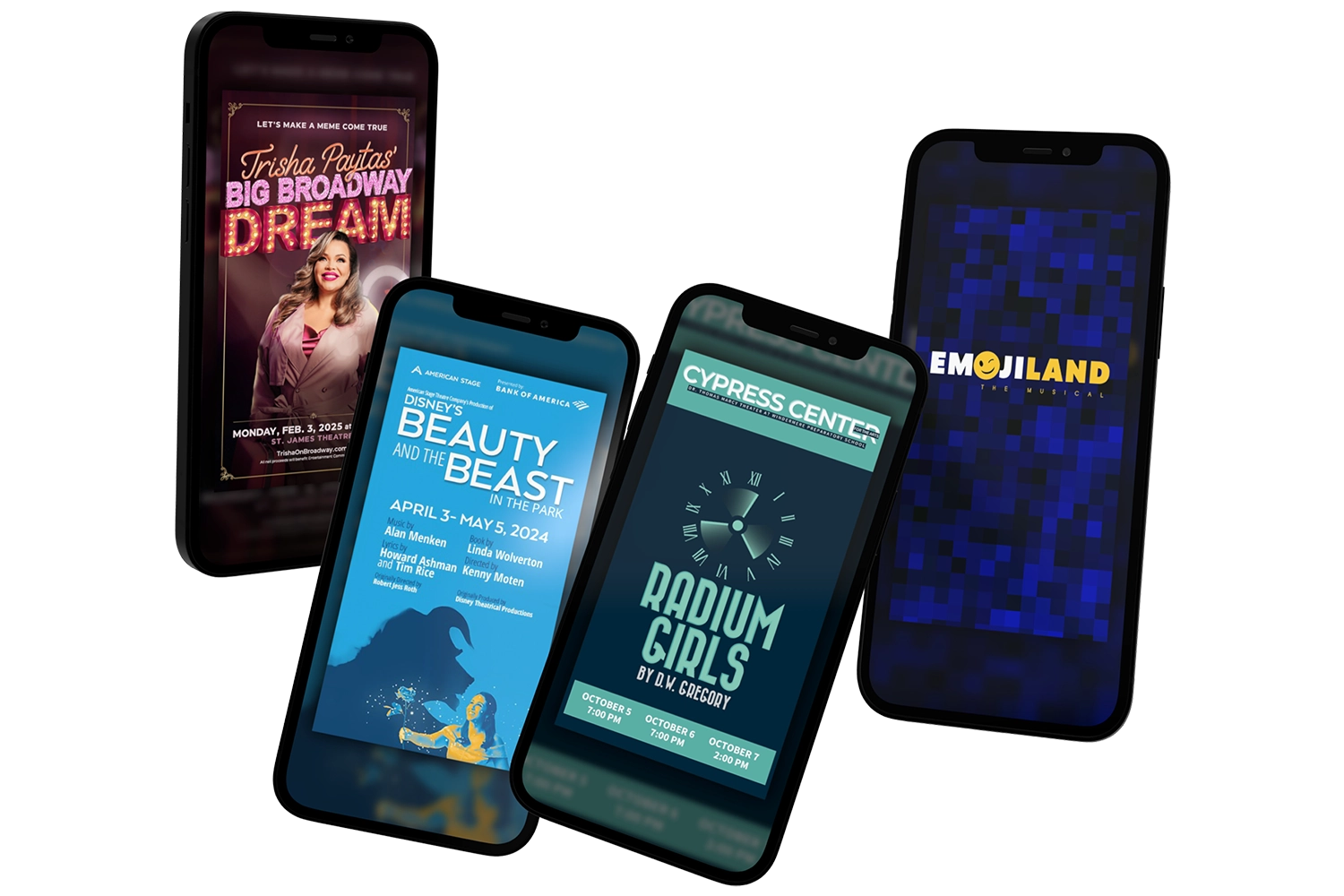
Digital programs meet different needs across the theatrical ecosystem. For professional theatres, they offer flexibility and polish at scale. For community theatres, they provide a more sustainable alternative in environments where time and resources are often stretched thin. And for audiences, they meet people where they already are, on devices they already use, inviting a closer relationship with the theatre, the work itself, and the people who bring it to life.
None of this requires abandoning what already works. Print programs still have their place, and for many theatres, they always will. Digital programs don’t replace that tradition so much as sit alongside it, offering another way to tell the story of a production—one that extends beyond the walls of the theatre and reflects how audiences engage with media now, and will continue to do so.
At Marquee Digital, our work is guided by that balance. We build tools that respect the rituals of theatre while making room for its future. We design quietly, with the understanding that the best technology in a live performance setting is the kind that disappears into the background as soon as the curtain goes up.
This blog will be a space for reflection and shared learning. We’ll write about audience experience, accessibility, licensing, design decisions, and the often invisible labor that makes theatre possible. We’ll talk about what we’re building, and why.
If you’re exploring how digital programs might fit into your theatre’s ecosystem, we’re glad you’ve found your way here. The form will continue to evolve. The intention—care for the work and the people behind it—remains the same.

Be the first to read our articles.


LAND ACKNOWLEDGEMENT:
Marquee Digital, LLC resides in the ancestral homelands of the Munsee Lenape and Wappinger Peoples. We honor the history of this land and its people, and continue to grow our awareness of the ongoing consequences of colonialism and oppression still unfolding in our society. We commit to supporting and celebrating the life, work, and spirit of the Indigenous stewards of this land, and hold ourselves accountable to carry on the legacy of their careful stewardship with honor, integrity, and allegiance.

.jpg)