


.png)





.png)


%20copy.webp)


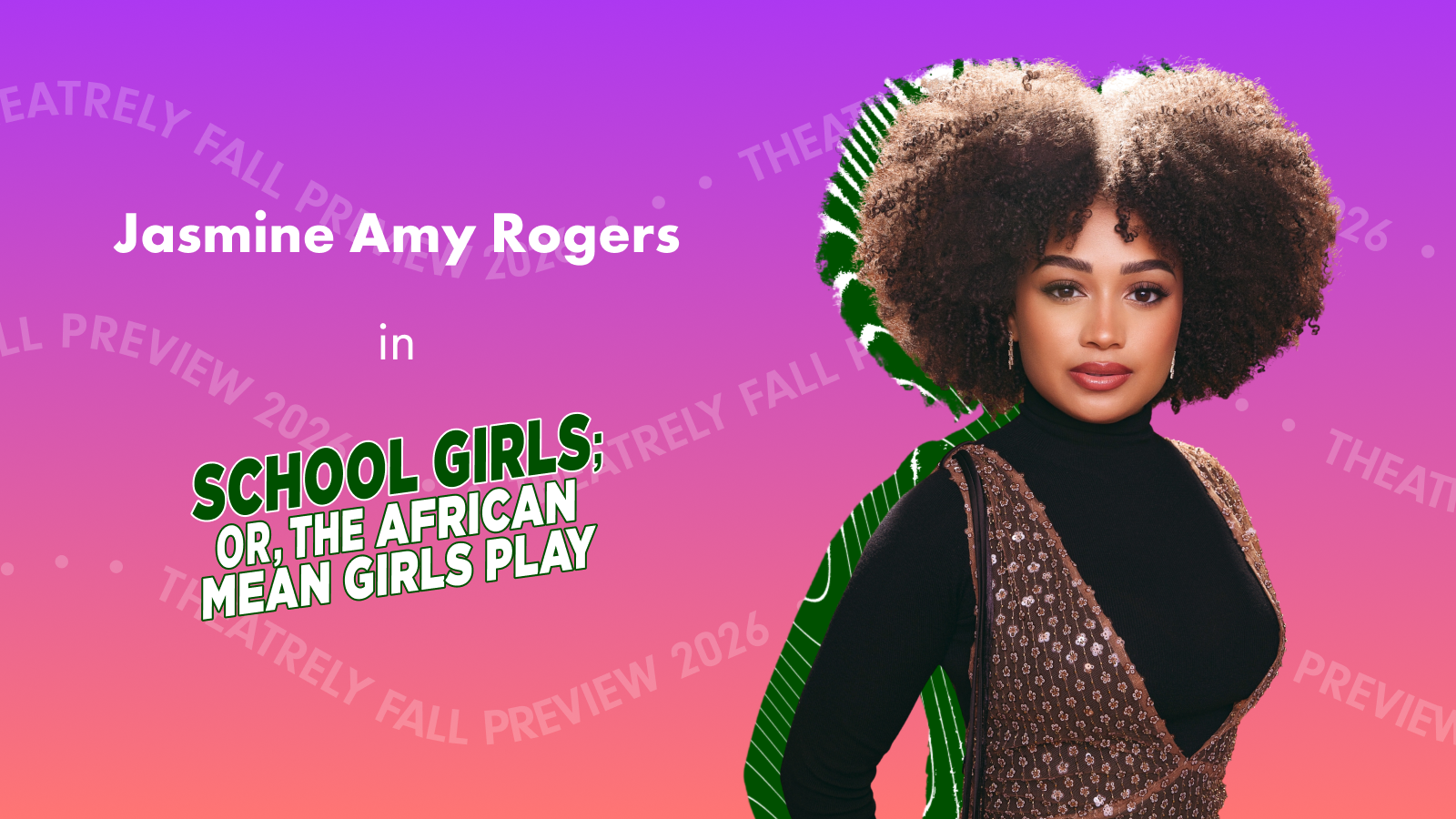
When Jasmine Amy Rogers burst onto Broadway as the titular character in BOOP!, we were in awe of her powerhouse vocals, incredible stage presence, and certified triple-thread status. Now, she’s taking on a new challenge: one where the rehearsal room has no sheet music in sight.
Rogers stars in School Girls; or The African Mean Girls Play at the Samuel J. Friedman Theatre this fall, making her Broadway play debut as Ericka. The play takes place in 1986, when women vie for the coveted title in the Miss Ghana pageant.
Theatrely sat down with Rogers to talk about her reaction to booking the role, how working on a play has changed her character-building process, and the joy of being in the room with so many talented Black women.
This interview has been edited and condensed for length and clarity.
First and very hard-hitting question, how is your summer going?
It’s been really good. It's been busy. I finished Spelling Bee [at New World Stages] and immediately jumped into School Girls rehearsal. I was lucky; I got a good three week break right before the last month of Spelling Bee, so I went to London and I wrote some music, which is a little side quest of mine. Then I went to Barbados and had a lovely solo vacation, so it's been a good, really, really good summer.
Wait, solo vacation sounds like the dream! That's awesome.
It was the dream. I recommend it to every person, but especially every woman. Like find a place you feel comfortable going, even if it's still within your country or the States, just spend time on your own time and like nobody else's rules. It's very healing, I think.
That’s amazing. I want to talk a little bit about your crazy year. You absolutely burst onto Broadway. Everybody is your biggest fan, and understandably so! How has that response felt for you?
I'm very appreciative, I will say. It's a very weird feeling, because for a long time, I was, and I still am, on the other side of that — of being a fan and being just a theatre lover. So I definitely find moments where I just am like, “what is going on?” It's been really special even being in the room now with the cast of School Girls, and the younger girls who are only like five years younger than me, but when I did the Jimmy's, they were in middle and high school, so they were watching me do that. It’s very special and it feels insane and out of body all the time. I'm just really grateful that I'm truly getting to live out my dream to the fullest extent so far. You couldn't ask for more.
How have rehearsals been so far? What has the process kind of felt like? What's the vibe in the room?
It's been two weeks. I think today was like our 11th day, and we have like a rough draft of the entire show, so it feels almost as if we've moved super quickly, but at the same time, we're really taking our time. [The play] is only 75 to 85 minutes, and it's brilliant writing, so we're really able to dive so deeply, so quickly. And because of the length of it, we're able to get the rough draft and then go back and dive even deeper. It's been just the most exciting and fulfilling experience. Like as an actress, I love to sing, I love to dance, but my dream has always been like, if I could just be an actress. I'm getting to really explore to the fullest extent of what that is for me and what it looks like to be a “real artist.” And this is a very great room for that. It's so incredible. It's exciting and so safe, which is really, really special because you don't always go into a room and feel held by the people there and the people in charge because at the end of the day, it is a product and we're putting it out to be seen by everybody and it reflects back on us. But you can tell these are the people who really care about the art and the story of what Jocelyn wrote.
You mentioned loving to sing and dance, and of course became very well known for your powerhouse voice. How has the process changed for you when you take out the music? Has it been any different for you?
It's challenging for sure. I think I've gotten to a point in my career where I'm allowing myself to not see the challenge as a detriment or a problem, but something to really pick at and crack. I think it's so easy for me now to go and experience this full array of emotions through song, but now without the music, it's a little frightening and a little, like my feet feel like they're on a little more uneven ground. But it's been really cool and I'm really proud of myself and I am learning so much about myself as a performer, the craft of acting, what's important in acting and what it really means to have like this really incredible book at your disposal. I've had the pleasure to work on a lot of brilliant, brilliant musicals, but every once in a while you do something where you can just tell the book wasn't the main focus because the music is so important and the music tells so much of the story. So to get to work on a book that is just so brilliantly, specifically crafted to just mean so much has been really special.
That's amazing. You mentioned the feeling of safety in the room and I'd love to hear more about that. How has it been working with your collaborators, and Whitney White?
I think there's always gonna be something very special about women in a room, a group of women, and then on top of that, a group of black women. This is a very sensitive thing we're kind of creating. It discusses a lot of topics that firstly affect all of us as people and then all of as women and then specifically us as black women and so in that, there's a lot energy that can, and a lot of nervous energy that you can have, but because we all share that, it's created this space where we're allowed to talk about it and allowed to feel it and fight through it and fully experience it. And it's been really special. And Whitney and Jocelyn [Bioh], because they're both there every day, have just really taken the time to allow us to not know what something is and. Work through and the rest of the cast as well. Like we're all there to support each other. So we let people have the moment to be like, “I don't know what this is or this is making me feel this way. This is coming up for me.” And they just are there and supportive and there's no judgment because we all know. And which is really, really special is that Whitney and Jocelyn both come from performing backgrounds, so everybody in that room knows what goes into creating a brand new character for yourself and telling a story that is just so close to home. They’ve just made sure that we all feel allowed to do whatever we need, individually, to process everything for ourselves so that we can deliver a performance that is as incredible as it can be.
What would you say is your favorite part about working on something like this?
I definitely think the familial feeling of being surrounded by Black women. My family is full of Black women, so it just feels really special to get to do the thing that I love most in a space full of people that look like me and experience life in a similar way to me. Everybody is just so lovely. Like we had a break today, a lunch break and we didn't really leave the room, because Whitney was craving french fries today and so she brought in a bunch of Chick-fil-A french fries so it was really great. All week she was like “I want french fries, I want French fries,” and she's like “no no no,” and then today she was like “how many french fries do we think we need to get through the run today?” No one takes it too seriously, but at the same time, everyone takes this very seriously. We just spent the lunch break in there, making noise, talking, and laughing. We always say we're creating a little family.
Going back to the beginning here, I'd love to hear what drew you to the material and how you got involved in the project.
I had never read the project, but I knew of it. I heard about it in the world of theatre. I got the audition and I immediately read the script. I found myself immediately drawn in, and I read the whole thing. I think what's really special about Jocelyn is she has an incredible way of handling this really tough subject matter in a very serious, respectful way, but then surrounding it with this hilarity and this very human behavior that can make something so incredibly funny, but at the same time so incredibly poignant. It’s hard to get that right. I was immediately like, “I have to be a part of this.” Then I got into the room and I literally started spewing to Whitney and Jocelyn about how excited I was to just be auditioning for this and auditioning for a play. I kept checking in for like a month to see if I got it. When I finally got it, I was screaming on the street.
Tell me about that phone call, where were you?
I was literally walking. I had gotten off at like 59th. I was on my way to Spelling Bee. It was a nice hot summer day. My agents called while I was on the train, and I was like, “I wonder what this is.” I had a feeling that it was good news and I got off, I called them back, and they were like, “how would you like to do a play on Broadway this fall?” And I was, like “you're kidding me.” It was like this weird Kismet kind of thing where a month or two before I even got the audition, I put on my Instagram story, I was feeling bold and I was like, “I want to do a play this fall.” Then the audition came and then to get the call, I was so excited and I called my mom and then I called my boyfriend, who's also a performer. I was just over the moon. I could not believe that I was gonna get to do a play. It's like this prestigious thing. I really do think like all acting is acting, so it's all the same skill, but it's a different practice of that skill. But I was like, “I'm gonna be an actress that gets to do a play on Broadway. Are you kidding?” I was astounded. I still am astounded. (laughs)
Here at Theatrely, we're very Gen Z focused. When young people come to see this show, what are you hoping they might take away from it?
BWAH! Immediately what comes to mind is the fact that you're going to look at these girls who are growing up in 1986 and you're gonna be like, “oh my God, these girls are just like me.” I think what's really beautiful about the human experience is that we've all been a child. No matter when you were a child, you were a child, and there's just things that everybody goes through at that age and the excitement and the way we talk to each other and the way we interact with each other. It's this very universal thing. Most of us, if we're lucky, have gone to school, so we've experienced these relationships and these “mean girls” and these really important friendships. I think they're gonna feel very seen. It's also hilarious, but it's all so heartbreaking. I think there's just so much for Gen Z to get from this, because most of the cast is Gen Z, so I think they're gonna see themselves in a way that they might not have been expecting to. I really, really am excited for that.

The Fantasticks legendary run cemented itself in New York City history, and now longtime friends Nathan Levy and Maxim Chlumecky are bringing it to a new generation — with an important queer twist.
I recently caught up with the dynamic duo to chat about their long time relationship, their feelings bringing the iconic musical to Broadway, and more.
This interview has been edited and condensed for length and clarity.
Theatrely: Nathan, why don't we start with you, how did this project come into your life?
Nathan Levy: I was literally about to go on a solo trip to Guatemala. This was like, April, April. And Max and I had the same agent and he called and said they're just doing this one day, casual reading of the show, mostly just to focus on like the new script and the rewrites they're doing. And so I tried not to get too attached, which was impossible. And yeah, it was just a one day casual thing with Max, which was the best.
Theatrely: When you heard, when your agents first told you that this was a project, what went through your heads? Were you both familiar with the show?
Maxim Chlumecky: Well, I remember seeing the announcement and seeing that it was a gay retelling of it. And I mean, I'd seen the show before, but I immediately just felt super attached to it from the get. And yeah, I mean the music is so beautiful. And yeah just to even do that reading from the beginning was so cool.
Theatrely: Nathan, had you seen the show before?
Nathan: My junior year of high school, my high school did it. And full transparency, I was not really paying attention to the show. My best friend did play Louisa though, so I was really just supporting her. But at the time I thought it was beautiful and good classic musical theater, which it still is.
Theatrely: I want to hear from both of you when you found out you got the role, how did that go?
Nathan: Oh my god, it was a crazy day for both of us. I auditioned at noon and then I had a matinee at two, finished the matinee, literally was in the house of the Stephen Sondheim Theatre and got a call. We're famously in a basement, so the service is not great, so I had to be in the theatre and I was just freaking out. I fell to the floor. I had known that Max also had booked it too, which was just like the cherry on top. It was crazy.
Max: I was in Aspen doing a contract and I got a call saying that there was a final callback for it. I was kind of kicking myself because I was across the country and Aspen is famously very hard to get in and out of. You have to take a plane to another plane because of the elevation and all the nonsense, so I booked a flight for the night before the audition. I got there and then I had an audition and read with Nathan — that was a fucking dream — and then I immediately left the audition, went straight to the airport, and was just decompressing and probably overthinking every single move that we did. Our agent called me, and just as I was about to board the plane back to Aspen. Everything went blank; it was insane. He was like, “Nathan's in a matinee right now, so I'm about to tell him,” but I was about to board a plane, so I wasn't going to be able to have any service. So I was like, “can you just tell Nathan that I love him while I'm on the plane?” I landed and I had like 17 texts from Nathan, and it was a really lovely day.
Theatrely: When did you two first meet?
Nathan: We met a long time ago. Max is a year above me at school. We went to school together. I came to Pace for a prospective students weekend from California, so I actually stayed with Max and his roommates in their freshman dorm, which is crazy.
Max: Which he reminded me of a few weeks ago and I had totally forgotten about it. Like it was somewhere in the crevices of my memory. We fully hosted him for a night. One night and he slept on the floor because we were like, “we have to humble you.” And that's when we met. We did school for the next few years together, but we never did a show together there.
Nathan: Until now.
Max: We are waiting for the perfect moment.
Theatrely: Crazy. What do you both admire about each other as performers?
Nathan: Well, Max has always been the smartest. Like, he can't not be truthful in his acting. I'm gassing you up. It's true. Literally the second I got to school, it was just obvious that he was that fucking guy. He was that actor, like, truly. Like, everyone, everyone knew it.
Max: It's funny because like the second Nathan got to school, I feel like there was like a rupture of events because he's always just been the star there. Did you leave school?
Nathan: I left halfway through junior year.
Max: Nathan is one of those kids in school who leaves because he's too talented and doesn't need to be going to school for this because he is doing it professionally. He left school his junior year, but you graduated, right?
Nathan: I did, thank you COVID.
Max: Talent. I mean, he graduated and was working. Oh, COVID. That's right. Yeah, he left to do Dear Evan Hansen. And quite frankly, he's never stopped working since then. So the proof is in the pudding. And if there's no there's, yeah, if someone's just already doing what they're going to school for, I think that speaks for itself.
Theatrely: Yes. I want to talk about obviously the big news that this is a new interpretation [of The Fantasticks] surrounding a young gay couple. I'm curious how you both feel knowing that you will be that representation of young queer love for this new generation and how that sits with you right now, before you even begin this process.
Nathan: What I think is so interesting and special about how we're doing this production is, yes, this is a new queer love story lens on this classic old school musical, but queerness isn't the main conflict or struggle.
Max: They're not tortured by themselves being gay.
Nathan: Yeah, it just is a part of the story, which I think is moving forward for future generations of younger queer people to see theatre is so much more impactful when you see a show and it just is. It’s not beating you over the head with it or making it, like Max said, the struggle, but I think that's the best part of it.
Max: Yeah, I totally agree. I mean, to see a queer love story that's actually just about the struggles of a relationship itself instead of it. There are so many stories about queer love that there are so many different versions that are valid and everything. But it’s so cool for, I think, there's one moment in the show where someone questions it, where it's like two men and somebody says like, “yes,” and then you move on. And it's so lovely to just see a queer relationship that's just talking about the joys and struggles of love itself and not so much about how hard it is to be gay. I'm so thrilled to be able to tell the story through a gay lens as well. Also, I find with such a classic show like this, that's such a big part of New York history. The fact that this was originally re-conceived by the writer himself, Tom Jones, who unfortunately passed away. In the last few years of his life, this was his project, to re-conceive it as a gay story. That's very vulnerable, I feel like, for a writer to be able to do, to change such a classic story. He has other works, he and Harvey Schmidt, but this is probably the one he’s most known for. For him to take his most prized possession and turn it on its head and be able to take that risk — despite criticism or controversies — it's so incredible. The fact that we get to do this is so, so special to me. It's not lost on us.
Theatrely: Theaterly is very much meant for the younger theatre-goer, a more Gen Z crowd. When young folks come and see this musical, many of whom I assume may have never seen The Fantasticks in any version, what do you hope young people take away when they come see your show?
Nathan: This show opened in 1960 off-Broadway, and it ran for 42 years. Anyone under 25 probably doesn’t remember that, so like they're seeing this show with a completely fresh lens in 2026. I hope it just enlightens that sort of musical genre to people. There’s beautiful singing, but it's just a true, beautiful love story that was written a long time ago and I hope it opens up their eyes to that.
Max: Yeah, this is New York theatre DNA. In a world where lots of different theatre is going on at the same time and very different theatre to what The Fantasticks is and what theatre was back then, it's opportunity for young people not only to see it in a contemporary way that they might appreciate now, but for them to just witness theatre in its purest form. It's not going to be a recreation of the original production but it's going to honor the simplicity and the purity of the original production, so it's an opportunity for them to see New York theatre history. When I talk to people about the show, I feel as though it's either, “oh my god, I love this show so much,” or “I don't know anything about it.” So it should be really fun to see. I feel as though the people who don't know as much about it are people who are younger and Gen Z. Just the fact that they kind of get the opportunity to see it and to get to know it is awesome.
Theatrely: Is there another classic musical in the canon that you would love to see remade through a queer lens?
Nathan: Like a true classic? Maybe Bye Bye Birdie or something, that was the first show I ever did.
Max: I don't know why, but Sweeney [Todd] is coming to mind.
Nathan: Queer Sweeney!
Max: Oh, maybe Oklahoma! I feel like there's a better answer, so maybe I'll come back to you on that.
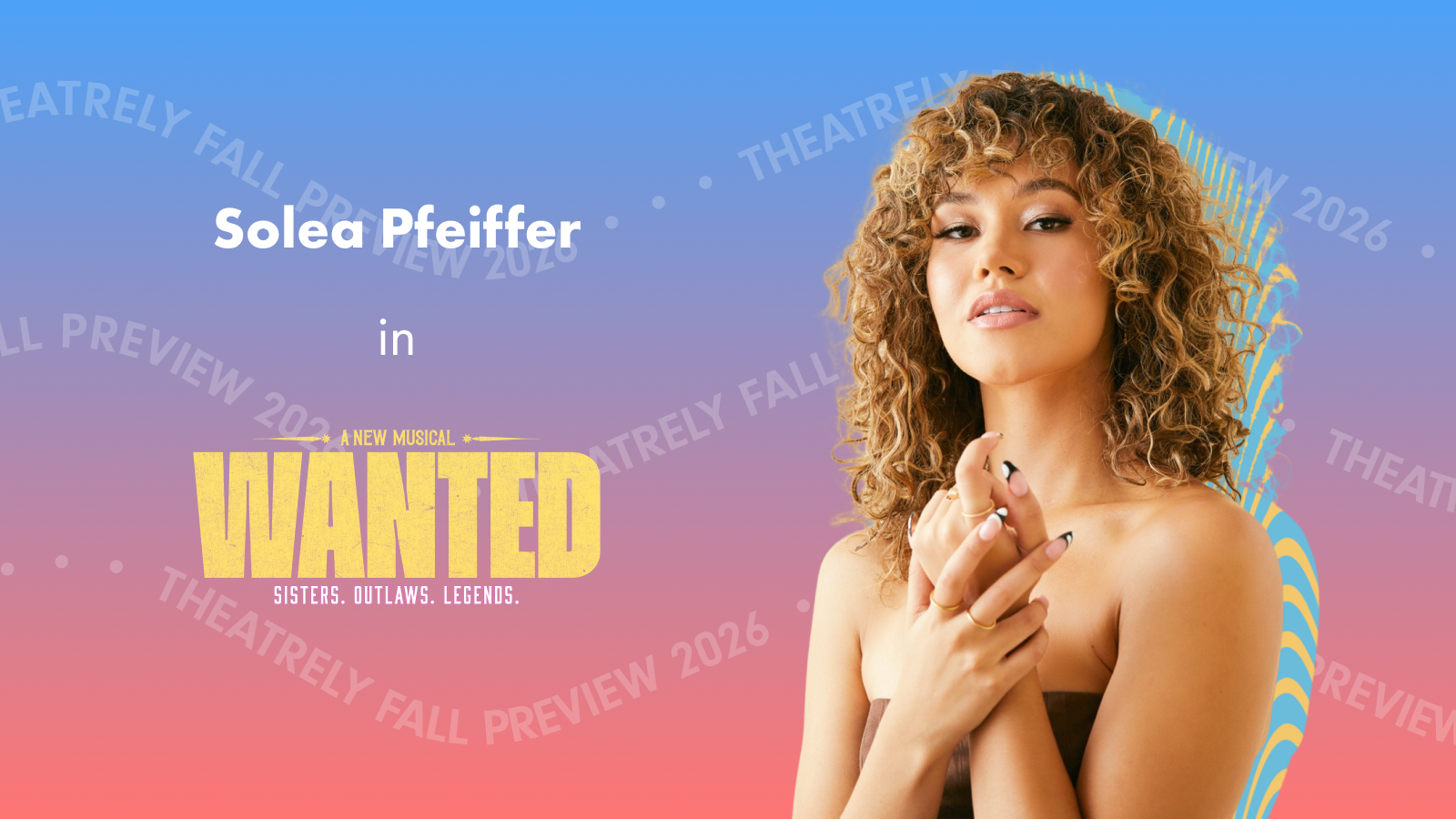
Solea Pfeiffer has booked almost every dream role she’s ever had in her 10 years in New York. But what she’s wanted the most? Originating.
She’s getting her wish when Wanted comes to Broadway this fall. She’ll originate the role of Mary Clarke, opposite her “best friend” Liisi LaFontaine as Martha Clarke, two Black daughters of a sharecropper who pass as white during the reconstruction era in the United States.Theatrely chatted with Pfeiffer about Wanted’s long and exciting road to Broadway, her relationship with her co-star, and why Wanted should be required in history class.
This interview has been edited and condensed for length and clarity.
You've been with this project for many, many years, so I’m very curious: what drew you to it in the first place?
Well the first time that I laid eyes on it was for a 29 hour reading in NAMT and that was actually when Liisi [LaFontaine] and I met for the first time and like she had just come to the city and we became like instant best friends you know and those are those things we get I think you get paid like 150 bucks and you just you go. We just had this amazing time together. Also it was like getting to really play specifically myself on stage was something that I hadn't even come across. Getting to really embody and explore within musical theatre the experience of being a half black, half white person was something that I hadn't gotten to do, and that's what this show was cracking open. Plus, the music is crazy fun to sing. What we're talking about, the themes of this show, I've seen it in little moments here and there in musical theater, but haven't had one for our generation necessarily. Also, getting to create a show that will originate two roles I would have loved as a kid, and have a hand on putting that out in the world was just like, that's the whole point, you know? That's why I got into this.
That has to feel so gratifying to be a part of.
Beyond. I feel like we've had like a handful of truly original stories, and there’s no source material for who Mary Clark and Mary Martha were. We are creating them with Angelica for the first time, and I’m so excited to be one of the first people to sing something, one of the first people to bring something to life. That’s what I've always wanted to do the most. This is my 10th year in New York actually, and I have been honestly gagged that life has gone how it has. I can't believe the things they've let me do since I've been here. I've gotten to do almost every single dream role. I've gotten to do just the scores that I've loved the most. But the main thing I’ve always wanted to do is to create something from the ground floor, and this year, I get to.
10 years, congratulations.
Thank you! And if anyone asks, I got here when I was 10 years old.
Exactly.
Ever since I arrived here on my tenth birthday, it's been a wild ride.
(Laughs) It’s good to know that the feeling of “I can't believe that somebody let me be here” never goes away.
I've been thinking about this, the whole concept of how it's very popular online to be “you’ve got to be delusional.” I'm getting kind of sick of it because I'm just like, “why is it delusional to assume that these things can happen?” I find that it's always really important to never acclimate to the air that we're breathing when we're doing this. Broadway is the hub of this art form for the whole world, and when all of our friends are doing it, it's easy for it to start feeling like the school play. When you're in the repetitiveness of the schedule, you have to be like, “wait this is this is crazy that this is happening right now.” My younger self, the girl who was singing Light My Candle all the time, would be like, “are you kidding me?” I know that what I have to offer is worth being on Broadway, and that is a really good feeling, but I want to make sure I protect that little kid to be like, “remember this is what you dreamed about. Stay in awe of the fact that you are doing this.”
You mentioned the dream of originating fully, with no source material. I'm curious how that has changed your process, if it has at all.
The first time I played this role I was 24, and that was eight years ago. When I did the out of town six years ago, it was literally the last thing we did in the before times; we literally closed less than two weeks before the pandemic began. I'm so happy to be playing this role again as an older artist, at this point, and to have a few more roles under my belt. I think at first I really wanted to get it right, but now I know we are creating the blueprint in real time. Our writer’s right here with us, we can ask her any question we want. We’re just really taking in as much as we can so that these girls feel like they're from such a different era when life was so, so much harder.
When I played Clara or Penny Lane, I was like, okay, I think I feel like I'm not the usual person who would play this role necessarily. Even like at Hamilton or Moulin Rouge or Hadestown, those are also the heavy hitters, I should say, where you're coming into something that people love so much. That can be hard to do sometimes, because people have these roles in their head and are so emotionally attached to what they know, which they should be, you know? Like, I feel like that's the cool thing about the musical theatre fandoms: they can have such a life outside of the actual show. What I loved so much about the artists that originated the shows that I did, they were all so distinctly themselves. That's what I've always loved about my favorite musical theater divas. They're so distinct, from Audra to Bernadette to Sutton to Adrienne, these women are so unique from the way they sound to their style and their approach. The thing that I love about each of them is they are them through and through. What I'm trusting is this role has found me again and again in all these different times in my life, and each time I’m bringing myself, not just me trying to get it right. I believe that my involvement in this show is a very spiritual thing, honestly. And every time I work on it, I learn so much about myself and the most magical people. I gain sisters every time. The approach with this one is a little bit different in that I can just fully be like “here I am, here is my spirit.”
Speaking of sisters, you mentioned Liisi earlier already. I'd love to hear more about your relationship and how you two work together.
She's just one of my favorite people ever. I think it was day three or four of the workshop and we had just been getting in trouble for talking during rehearsals as adults. I feel like when we met, our souls were like, “hee hee, hoo hoo hoo.” She was very much a puzzle piece person in my life, she just fits. We have traveled the world together. Our boyfriends literally have a DJ duo now — never saw that coming. We both played Satine in different places, we've had a lot of mirrored experiences, and it's just incredible to be able to relate to another human on so many levels, from identity to work to just having a really, really good time together. Getting to Broadway, it takes so long, so we were like, “okay, okay, let's not get our hopes up.” At this point in my career, I know better than to expect anything is for sure. We weren't sure if things were gonna happen, and then finally, when we saw the poster, that picture of us that they have, and I was like, oh, holy shit. What's my best friend and me on a poster for a Broadway show? And that is so insane. I get to be on stage with her for her Broadway debut. I get to have the best seat in the house for this major life moment. It’s just the best. It's crazy. We're literally neighbors, she lives like 10 blocks away from me. Four days into our time working on the reading, we both told each other “I wrote in my journal this morning that I'm pretty sure you're going to be one of my bridesmaids.” We had done the same thing on the same day. So corny. But I feel like the older we get, when you have people in your adult life that you just click with right away, it's like, “oh, yeah, I'm keeping you.”
That’s so wholesome, I love that.
Super wholesome.
Looking ahead to previews and opening, I'm curious: when young people come to see the show, what are you hoping that they might take away from it?
Oh my God, so much. This story is obviously really specific in what it's about. It’s about the two daughters of a sharecropper who pass for white in the deep. That’s not a life that most theatre-going people have ever experienced. I think at this moment in history, when they're trying to rewrite history. They're trying to take this chunk of time of post-emancipation, pre-civil rights — the era of Reconstruction I think is like the blueprint for everything we're experiencing right now in America. There’s a few things that I hope. This is a story about feeling whole in your body, in yourself, feeling like you were born worthy, and the power of unconditional love to be able to give that. I think that's a big part of this story. There's also a part of me that hopes that young people will be like, “wow, I didn't know this about my country. I didn't know that this was happening,” and that it can be a jumping off point to learn more. The more you learn about this time, the more you learn that a lot of the things that are happening right now in our country have happened before. A lot of things that we are witnessing are just a part of the American playbook, really, and our freedoms were hard won. That’s what it's done for me. I've learned so much that I didn't learn in school that I'm like, I can't believe this isn't required. The last thing we want to give is just a history lesson, but it is a time that is just rife with moments in history that I think should be required learning. It excites me that if people love these characters, that they might find out more about this time and what it was like to be people at this time and be like, “oh shoot, okay. I didn't know that about America. Maybe I'll run for city council,” you know? I hope people leave this show, and then they run for office and start fighting for what they believe in.


