


.png)


.png)
The 2025 Broadway Cast album of Chess will be released in digital and streaming formats tomorrow, Friday April 10 through Ghostlight Records. The recording will be released on CD and vinyl later this year.
The new album is based on the record-breaking production currently running at Broadway’s Imperial Theatre, starring Aaron Tveit, Lea Michele, and Nicholas Christopher.
Theatrely has an exclusive first listen to “Where I Want to Be” performed by Nicholas Christopher.
Chess currently stars Tony Award winner Aaron Tveit, Lea Michele, and Nicholas Christopher, and features Hannah Cruz, Bryce Pinkham, Bradley Dean, Sean Allan Krill. The ensemble includes Kyla Bartholomeusz, Daniel Beeman, Shavey Brown, Emma Degerstedt, Casey Garvin, Adam Halpin, David Paul Kidder, Sarah Michele Lindsey, Michael Milkanin, Aleksandr Ivan Pevec, Aliah James, Sydney Jones, Sean MacLaughlin, Sarah Meahl, Ramone Nelson, Fredric Rodriguez Odgaard, Michael Olaribigbe, Katerina Papacostas, Samantha Pollino, Adam Roberts, Regine Sophia, and Katie Webber.
To pre-save the album, visit here.

Some fools will look to identify a singular moment in this transcendent Broadway transfer of Cats: The Jellicle Ball—a scene, a song, even a lighting shift—that lands with anything other than graceful perfection.
They may try. They won’t succeed.
“What about ‘Bustopher Jones’?” I hear you asking, foolishly. “That’s one of the weaker numbers in Cats, right?” Wrong. In this Ball, the vivacious Nora Schell has reinvented the “cat about town” as an incorrigible friend to all, a spirited lover of sex, drink and revelry. Bustopher is an icon now—get with it.
“Well, ‘Gus the Theatre Cat’ is always a bit dull, isn’t it?” you might suggest, recklessly. Idiot. Gus has been redefined as a ballroom veteran, still throwing shade from the box seats with the best of them; a wearily witty Junior LaBeija (of Paris Is Burning) owns the stage in the role, provoking waves of laughter with the slightest eye-roll.
“Are you really saying that even ‘The Ad-Dressing of Cats’ somehow lands?” Of course, you imbecile. The final number of Andrew Lloyd Webber’s enduring 1980s musical, which bizarrely chose to conclude with a treatise on proper engagement with felines, has been reframed as a counseling of respect for the ballroom legacy. Now you know—and don’t you forget.
The concept of Cats: The Jellicle Ball, now on Broadway at the Broadhurst Theatre following a celebrated run at PAC NYC in 2024, is as simple as it is demented: co-directors Zhailon Levingston and Bill Rauch have transposed Cats into the underground ballroom scene. A parade of “Jellicles” strutting their stuff here become battling performers in a ballroom competition. Old Deuteronomy (André De Shields) becomes a queer elder judging the competition. The narrator, Munkustrap (Dudney Joseph Jr.), is our catty Master of Ceremonies. And Grizabella (“Tempress” Chasity Moore) is a faded trans ballroom icon of yesteryear, cast aside by the world yet worshipped (if at a distance) by this new generation of “Cats” as a living legend.
It works. It works because the ballroom setting lends weight and specificity to a narrative world that previously felt airless, abstract to the point of nothingness. It works because Webber’s songs translate easily to ballroom categories. Most of all, it works because it’s a hell of a lot of fun.
And on Broadway, it somehow works even better. I did worry that something might get lost in the tighter confines of the Broadhurst—a flexible space at PAC had allowed for both a long runway on stage, and bustling actions on all sides. Could the magic survive the transfer?
I needn’t have fretted. On Broadway, Cats: The Jellicle Ball has both sharpened in its staging and deepened in its significance.
Scenic designer Rachel Hauck has masterfully reshaped the proscenium space, adding stage seating that blends seamlessly with the action. Choreographers Omari Wiles and Arturo Lyons utilize every nook and cranny of the Broadhurst, with Jellicles popping up on all sides. Wild movement work and meticulous lighting by Adam Honoré (the two elements working together far more smoothly than at PAC) keep our eyes focused on necessary action while still allowing space for the requisite ballroom frenzy—bodies everywhere, moving as one yet all, uniquely and thrillingly, telling their own individual story.
Dropped into a historic Broadway house, Jellicle Ball also plays more clearly and movingly as a defiant revolt of queer joy against a regressive and unadventurous culture still fighting its way out of the Stone Age. The voguers have, somehow, invaded a house of the establishment. And they’re wreaking gorgeous havoc.
Within that rich context, I found the high points of this production all the more intensely euphoric. The opener, “Jellicle Songs for Jellicle Cats,” is simply electrifying; “The Jellicle Ball” offers an overwhelming explosion of brightness and beauty; and the arrival of Old Deuteronomy, played by the incomparable De Shields, is sheer communal bliss. No other performer could command such a roaring audience response. That Shields is notably just a little frailer of body (though not mind or voice) adds only greater weight to his presence.
Other highlights include Sydney James Harcourt’s scorching hot take on “Bustopher Jones,” and a visit from “Skimbleshanks: The Railway Cat,” hilariously transfigured by Emma Sofia into the most fabulous MTA conductor you’ll ever meet.
Far from using the culture as a gimmick, Levingston and Rauch pay loving tribute to ballroom’s rich history. A tasteful history lesson at the top of the second act, paired with “Moments of Happiness,” provides an introduction for under-educated audience members like myself.
Under William Waldrop’s musical direction and supervision, a perfectly modulated band blasts Webber’s score (re-orchestrated to perfection by Webber and David Wilson, with some skillful help from beats arranger Trevor Holder) while never overwhelming the performers. And the already perfectly ostentatious costumes by Qween Jean have gotten a welcome upgrade for Broadway—over 500 looks, each as breathtaking as the last.
Lastly, of course there is Grizabella, the original “Glamour cat.” The sheer presence that Chasity Moore brings to this role elevates Jellicle Ball to devastating emotional heights. Moore’s rendition of “Memory” is ragged, and weary. It carries a weighty history, and years of pain. It is precisely all that history, deeply felt in this momentous staging, that makes both Moore and this production so otherworldly. This Ball is not just a remembrance of things past—it points a way forward, to a more fabulous future.
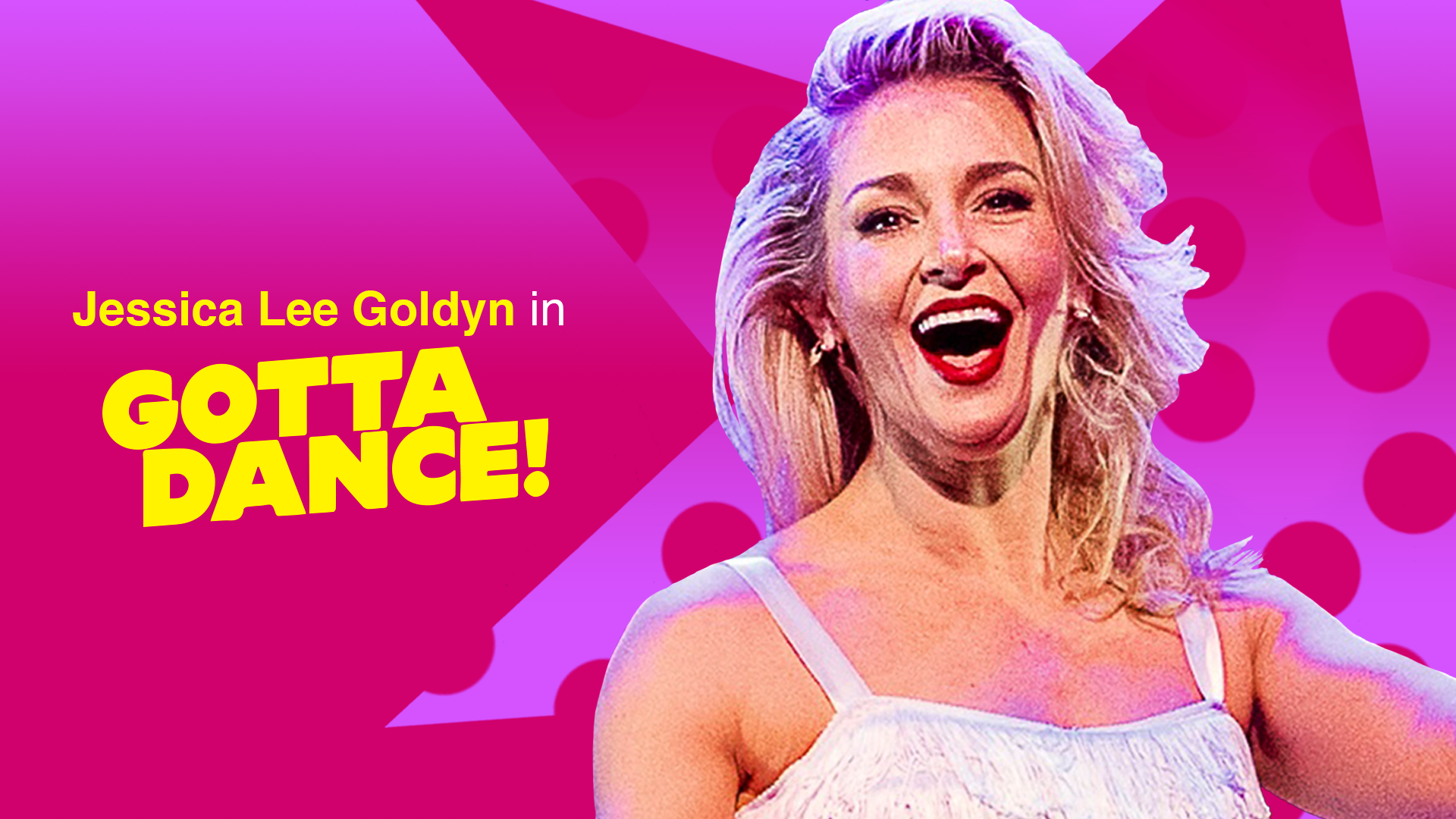
I don’t know if I can ever remember the first time I had the privilege to see Jessica Lee Goldyn on stage, but I know every time she is up there, it feels like magic. So earlier this year when I caught Gotta Dance at the York on the Upper East Side, to say it was a true delight is an understatement.
It’s now back, and dare I say, better than ever at Stage 42 here in the heart of midtown. I recently caught up with Goldyn to chat moving this behemoth of a dance show down 34 blocks, working with her partner, and A Chorus Line’s 50th Anniversary. Our conversation has been edited for length and clarity.
I caught the show at the York and just completely fell in love with it, so I'm thrilled that it’s back. Tell me a little about how you got involved with this project.
I have had a history with American Dance Machine for over a decade now. And last spring, I did a concert at the York for American Dance machine. I just did Music and the Mirror, Donna McKechnie asked me to do it. And that night, Nikki Atkins said, you know, we're going to do a show here at the York, and I'd love for you to be a part of it. Before that, I hadn't really done anything with American Dance Machine for like 10 years, so it was such an amazing, wonderful surprise and reconnection. I don’t think any of us realized what the York was going to turn out to be. This sold out, people crying in the audience, people coming back multiple times, like what an awesome surprise. To find out we're going to have this life moving forward at Stage 42, it's just been so wonderful to see the response and I'm having the time of my life getting to do all of this incredible work.
Why do you think audiences were so taken and moved by that run you had at the York? What is it about this show that is so special that is having people come back and back and folks crying in the audience?
Every single number that we're doing is so special and brilliant and iconic. I like to say it's like a show full of 11 o'clock numbers for dance. It’s still so relevant today, all of Michael Bennett's work and Jerome Robbins’ work and this storytelling through movement that everyone can relate to. But then also you've got the best of the best dancers in New York on one stage giving their absolute all every single time. It made me cry in the wings witnessing it. I think that's what made people keep coming back, is just wanting to feel that feeling of. It's like when you can feel truth in humanity, you want to be around that and it just uplifts you.
There's so much joy in the show. I would love standing in the wings getting ready to do Music and the Mirror as I Love a Piano would finish and just hearing the roar of joy that would happen every night. It’s just such a beautiful ride. There's a lot of playfulness, it explores everything — something as dark as Pippin and the Manson Trio, which is just so brilliant. We had Stephen Schwartz come and visit us on our last day in the studio and talk about that piece. Then you go into Music and the Mirror and Cassie's humanity and begging for a job and needing to work. I don't think there's anyone who can't relate to that at some point, of just really knowing what it is that you have to do and fighting for that. There’s just a ton of like top tier, Grade A dancing happening all over that stage.
It is thrilling. It's amazing. I'm wondering if you could talk to me a little about how the numbers you chose were chosen.
I've had such a history with a chorus line and in working with Donna McKechnie for the past decade, so Music and the Mirror was always on the table to preserve and present. It's so awesome to share it with this new generation. And then Shimmy, Nikki Atkins came up with Shimmy and it was a number that she'd wanted to explore that American Dance Machine had never done. I have been such an enormous fan of that number forever. I mean, DeLee Lively, I can remember being like 11 years old and running out that PBS special on the VHS at that time. So when she said, “would you like to audition to do Shimmy?” And I was like, “um yes!” Joey McNeely's choreography is so brilliant, so that’s how that came to be. I feel like I secreted that for my whole life. Then this time around at the York, I did a Brass Band from Sweet Charity. This time around, I'm going to be doing City Lights from The Act. That one, when we knew we weren't going to do Brass Band again, the team started cooking up ideas of what numbers might fit well in the show and be good for me. City Lights came up and it wasn't one that I had ever considered, or, that's a lie. I guess I didn't realize I had graduated. The last time I did City Lights and I think probably the only other time it's ever been done, really, post- The Act was 11 years ago. Amara Fe Wright did it at the Joyce Theatre when American Dance Machine performed there. I loved the number so much that I begged to be in the number even though I already had a tall order in that show, I said, “please can I be in that number because it's so brilliant.” So she presented that to me and I said, “wow okay yes.” So, paying homage to Liza [Minelli] this time; it’s such a fun and brilliant number.
I want to talk a bit about you working with your partner because it's not something that always gets to be done and how special that is for you and what that means.
Oh my gosh, working with Blake. It's just the best to have my touchstone in the building. I can just walk across the hall and into his dressing room. We met doing a show, we met during a production of Chicago at the Fulton Theater seven years ago. We’ve had a couple of moments to be on stage since then, and of course, the York. We did the 50th anniversary of A Chorus Line together. But this feels like the first real run that we've ever done in New York together, and that's a cool thing. We were walking home from the theater last night in Times Square and going, “oh, this is our first walk together coming home from work!” It’s awesome. And also he's just the best freaking dancer I've ever. Seen standing in the wings and watching him do what he does. He inspires me and just the support we support each other he's the best.
At Theatrely, our audience tends to be a bit younger, more Gen Z, so I'm curious when young folks come and see Gotta Dance Now at Stage 42. I can only assume a lot of them will be seeing a lot of these dances for the first time. What do you hope they take away from seeing this production?
I think part of the thing that keeps me coming back to all of this material: How beautiful the simplicity in storytelling can be. I think sometimes as theatre has evolved, the stage can be filled with so many things that we don’t even quite know where to look sometimes. It’s like a feast for the eyes, but this is a different feast for eyes. We couldn't have evolved to where we are without this work. And it’s still so relevant. I talk about Beyonce's Single Ladies all the time, and how that was Bob Fosse's Mexican Breakfast, and Gwen Verdon danced that well before Beyonce. Just seeing those roots, and appreciating that. I think these are just gems that people might not have known, especially the younger generation, maybe haven't been introduced to yet. And I believe they're gonna be as obsessed with them as I was at their age.
Absolutely yeah. I want to talk about A Chorus Line, and the whole anniversary that we just celebrated. I was there that night, it was, oh my god, one of the best nights of my life.
You got in?!
Yes, I got in!
Amazing.
I made sure I was going to be in that room. Obviously, Chorus Line has been with you in your career for such a long time, and still is now, and I'm sure will be continuous for many years to come. But I'm curious, when you think back to that night at The Schubert, that was so special. You've had some time to reflect on it since it's been a few months. When you think about that night in 10, 20, 30 years, what do you want to remember most about that experience?
Oh my goodness. There's the image of seeing the originals hit the line and hearing the audience roar and watching their headshot shake behind, and that was very special. It felt like that whole week, felt like the 50th anniversary, not just that night. There were so many of us, alumni from ‘75 on, gathered at 890 Broadway, which was, of course, the building that Michael Bennett owned. And we just danced for fun. [We did] the opening and sang What I Did For Love, and I got to dance Music and the Mirror with Karen Ziemba and Bebe Neuwirth. It was one of the most unbelievable days of my life. And then Baayork’s led flash mob at Lincoln Center, seeing so many generations of A Chorus Line come together, and then the 50th, I think it all culminated in looking around and going, “look at how many lives have been touched by this show, it's still running through your veins.” Once you've done that show, you're part of that family.
I think that's also why I'm so passionate about keeping that flame alive. It's just a beautiful thing. I just said recently, I was talking about it in another interview and reflecting on it. There's something so special about Michael Bennett's work. I've never met Michael Bennett. I've been lucky enough to work with the people who knew him very well, but through his work, he's made me feel so seen in my life. And I think that everybody across the board feels that in doing that show. So it was another layer of that, another night of that. There will never be anything like that night. Oh my gosh, that audience. And just the people in that building, all the Cassies dancing, Music and the Mirror, all of the numbers having so many different generations of the character involved is just so special. I think it was just the love and I got to have kind of the touchstones, the people who taught me the show, all in one place. I don't know that I've really had that yet. You know, Donna Drake and my original mentor, Louis Villabon and Baayork and Mitzi and Donna. It was like looking at the journey in one spot.
A night I’ll never forget.
Never.
Is there anything else for Gotta Dance that we haven't touched upon yet that you want to chat about?
I just think, personally, I've wanted and waited for a dance show like this to happen and on Broadway or in New York, and it's just such a special thing for something like this exist with so many different classic and also kind of contemporary. Shimmy — what was that, the 90s? — same with something like Susan Stroman's Contact, which is very much so kicking around to come back. That was so revolutionary, the first show to win a Tony with canned music, no singing, and all storytelling through movement. It’s a rare thing to have a show like this in New York. So I'm so excited about it, and I hope that it inspires more of something like this to happen, but it's important for audiences to see it because it’s a rare thing.


