





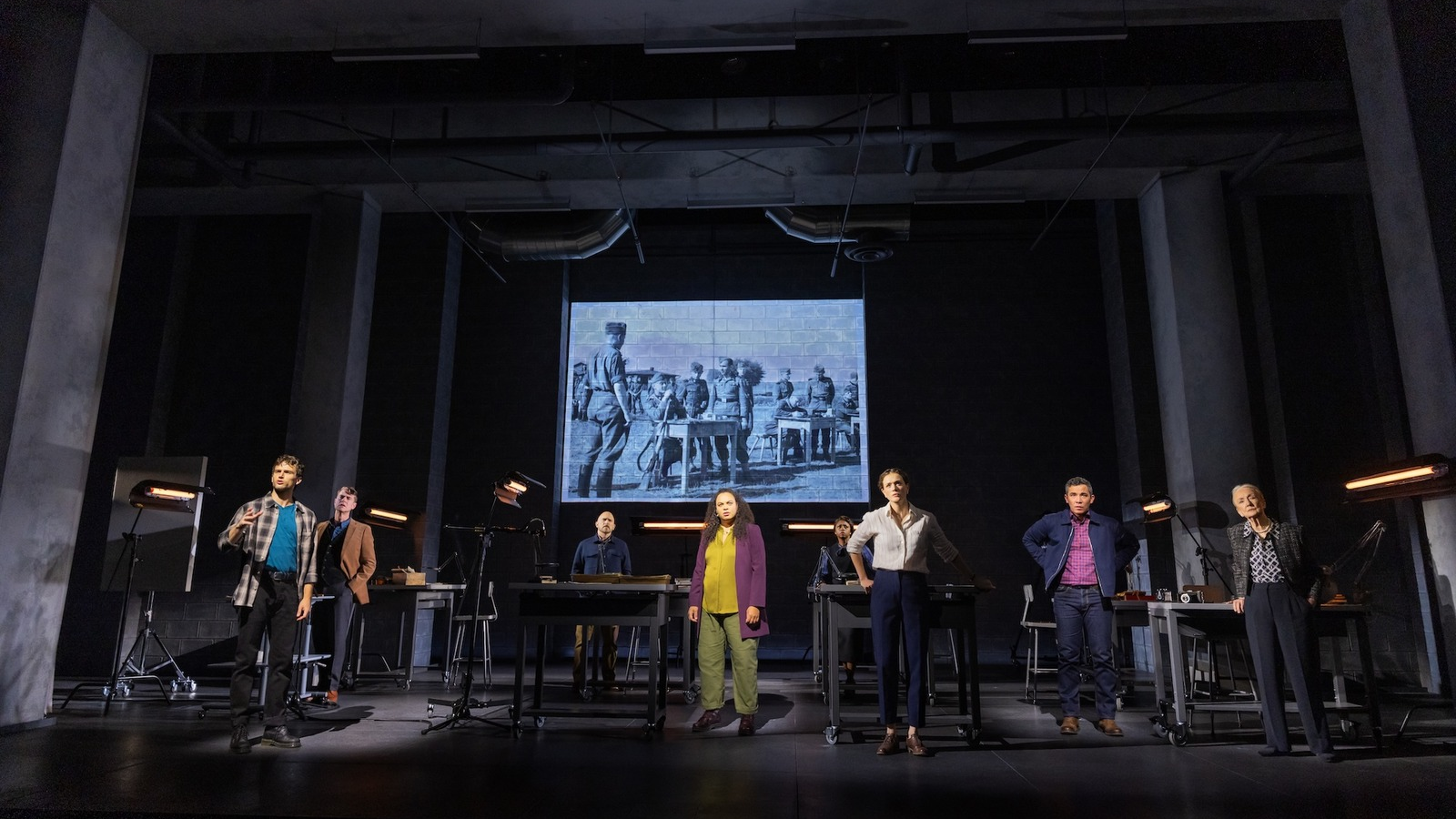
Here There Are Blueberries begins, not too convincingly, as a detective story. Tectonic Theater Project’s investigative piece, premiered at La Jolla Playhouse in 2022 and now playing a limited Broadway run at the Barrymore Theatre, lives unnaturally in that mode of storytelling for a time before opening out into more intriguing, dramatically coherent questions. Once it reaches those larger inquiries, Blueberries does prove a stirring piece of theater—if not always a natural fit for a Broadway stage.
To begin, a photo album has landed on the desk of historian Rebecca Erbelding (Elizabeth Shahlmann), an archivist at the National Holocaust Museum in Washington, D.C. The album depicts daily life in and around Auschwitz from the perspective of the camp’s military leaders, their families, and various staff. These photos are frightening in their normalcy: parties, days off lounging in beach chairs, children playing in front yards. Just outside the frame, a mass extermination event goes unacknowledged.
The album in question was first discovered in 2006, then made public by the museum two years later. It earned global headlines and renewed a push to track down and prosecute leading Nazi commanders depicted in the photos. Following years of interviews and extensive research into the album and its fallout, the acclaimed company Tectonic (best known for The Laramie Project) debuted Here There Are Blueberries in 2022 at La Jolla, followed by an off-Broadway production at New York Theatre Workshop in 2024. The text is by Tectonic artistic director Moisés Kaufman and author Amanda Gronich; Kaufman directs this Broadway staging, as on previous productions.
The play’s early scenes focus on Erbelding investigating the album’s content. Alongside a staff of researchers she pieces together the identities of those pictured, the locations of the shots and the time period covered in the photographs. The text by Kaufman and Gronich tends to frame each new discovery as a shocking revelation, many gravely intoned by either Erbelding herself or other staffers. Under Kaufman’s direction, the delivery feels stagy, lines thrown at us with vocal underling and italicization to highlight the significance.
The impulse to inject some narrative drama into this research process is understandable, but it all feels a bit forced. Much of what we’re learning feels routine to any historical research process, and it is hardly detective work. The owner of the album, SS Commander Karl Hocker, is identified straightforwardly by photo captions; a resort nearby Auschwitz named Solahütte is located by reviewing maps and nearby geography. It would be enough, I think, to here simply depict a set of smart and competent minds performing their jobs with skill. That can be thrilling all on its own.
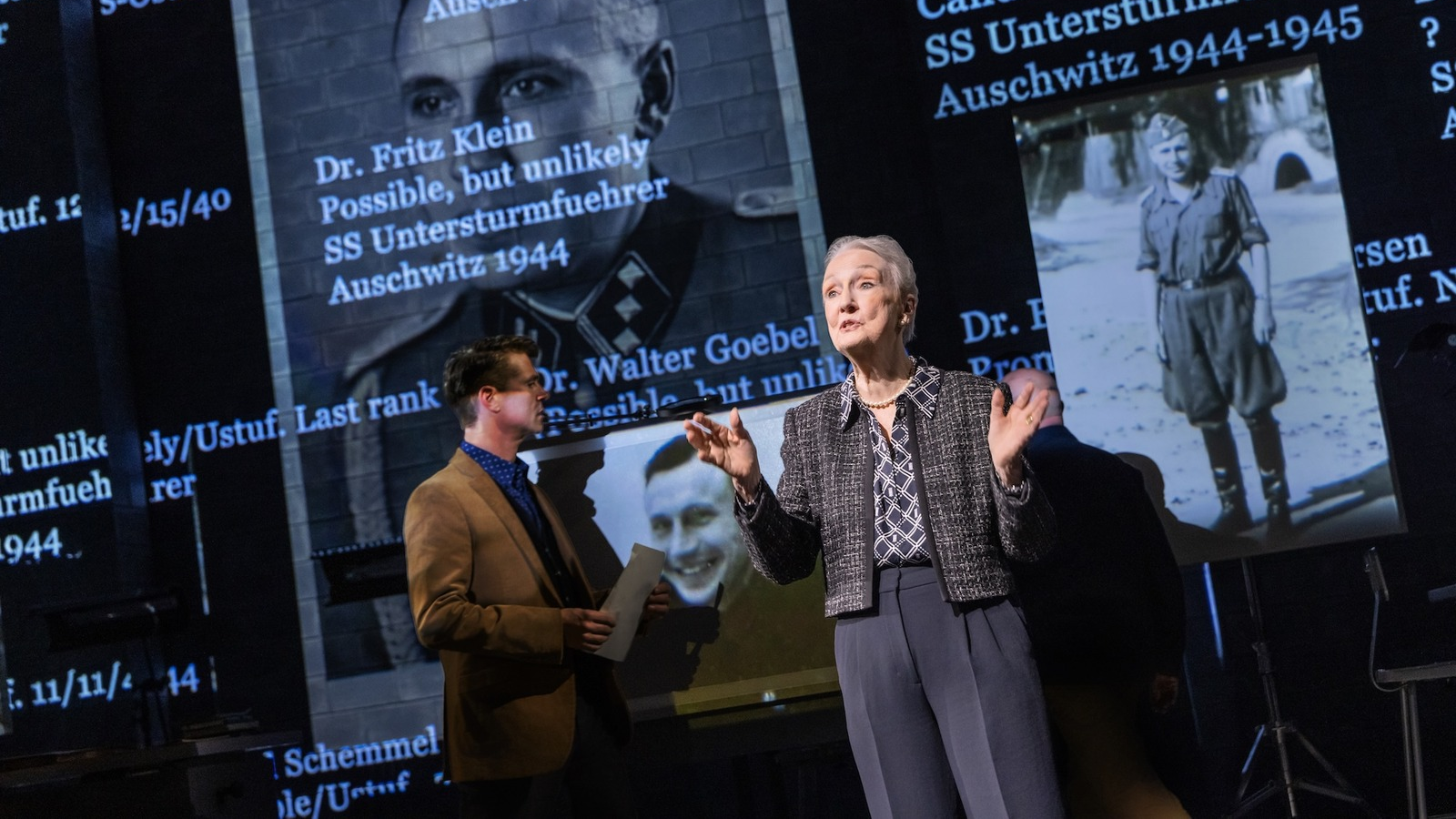
The same approach could have better served scenes where Erbelding and her various superiors (portrayed by Kathleen Chalfant, Montego Glover and Brandon Flynn) debate the ethical questions posed by releasing and exhibiting the photos. Would it risk humanizing the perpetrators of mass murder? Does it fit the mission of the museum? These are intriguing questions, and they do take on a fuller life later in the play. But again, the performers are pushed to play these debates as tense, even deeply personal. I was not totally convinced—would professional researchers talk to each other this way?
But there is more still to unfold in Kaufman’s elegantly austere staging, which begins as lecture-style but gradually finds some warmth. Scenes focused on unpacking the photos themselves play awkwardly on the larger Barrymore stage—even seated in the orchestra, I felt at a great distance from the images, which projection designer David Bengali mostly places on the upstage wall.
Yet this strong ensemble of performers do generate a feeling of direct connection with the audience, close at times to intimacy. The most successful in this regard is the esteemable Kathleen Chalfant, a performer of rare grace who always feels like she is speaking directly to you. Michelle Beck is similarly strong, while Scott Barrow does careful work in multiple historical roles while steering clear of direct impersonation. Tony Award winner Michael Ceveris is also excellent, most especially as a descendant of Nazi officers struggling with his family inheritance.
That question of inheritance is powerfully explored in a scene centering Rainer Höss, the son of Auschwitz commander Rudolph Höss and a man gripped by violent and destructive urges that he fears live inexorably in his blood. The scene includes a challenging monologue, probably the play’s most daring, that Flynn plays with careful restraint. (His scene partner Conrad Ricamora is unfortunately flat as Tilman Taube.)
Höss’s monologue leads us into the strongest and most resonant theme of Blueberries, one that pushes its audience to look inward: how different are any of us, truly, from the people depicted in this album? The normalcy of the photos drives the point home. Are we capable, under the right circumstances, of similar barbarity?
“We have to look for ourselves,” concludes Erbelding, “in every picture.”
She means not just the officers, but also their families, who knew everything; or the staffers, many of them young women, who knew everything. She means not just the direct perpetrators—though yes, that could be us—but also the accessories, the ones who carried on their lives while ignoring all that lived outside their personal frame.
In terms of contemporary resonance, the idea is left amorphous, a notion to be chewed on without specificity. I reflected personally, on the devastation in Gaza; I also thought of the daily violence inflicted by ICE across the United States. I thought of our smaller and daily capacities for cruelty, seen and inflicted by all of us in daily capitalist life, in ways both very big and minutely small. The expansiveness of the final question has frustrated some critics, and reasonably so. But for me, it feels right for this particular story, centered on this particular album. Evil is everywhere, and it does not have a special face. It is in you, and me, and all of us.
here There Are Blueberries is now in performance at the Barrymore Theatre on West 47th Street in New York City. For tickets and more information, visit here.
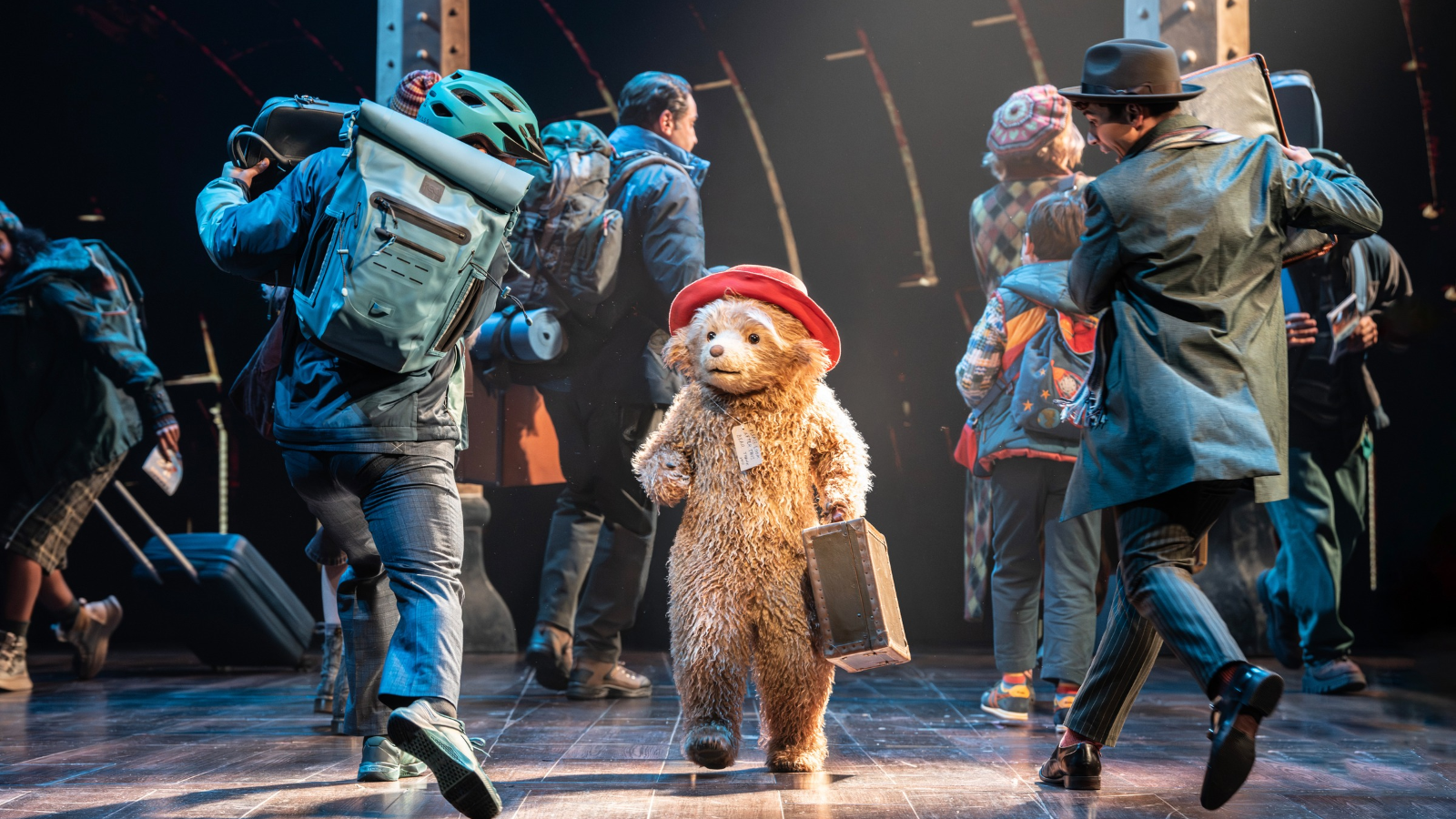
That loveable British bear is making his way to Broadway with a true all-star cast of Broadway favorites and newcomers alike.
The company will be led by Kelvin Dukes (“America’s Got Talent”) as Tony, Drew Gehling (Waitress) as Mr. Brown, Allison Guinn (Operation Mincemeat) as Lady Sloane, three-time Emmy Award winner Tony Hale (“Veep”) as Mr. Curry, Olivier Award winner James Hameed (Paddington The Musical Original West End Cast) as Young Man/Paddington (Voice & Remote Puppetry), J. Quinton Johnson (Hamilton) as Grant, Leslie Rodriguez Kritzer (The Fantasticks) as Millicent Clyde, Zonya Love (The Color Purple) as Tanya, Tony Award winner Jessie Mueller (Waitress) as Mrs. Brown, Serena Parrish (Don’t Say Good Luck) as Judy Brown, Olivier Award winner Arti Shah (Paddington The Musical Original West End Cast) as Paddington (Onstage Performer), Tony Award winner Karen Ziemba (Contact) as Mrs. Bird, and Drama Desk Award nominee Chip Zien (Into the Woods Original Broadway Cast) as Mr. Gruber. The full cast will be announced shortly.
“We’ve been completely blown away by the extraordinary artists we’ve met throughout the casting process, and by the warmth and enthusiasm with which everyone has welcomed Paddington to Broadway. We really do have a dream company. These are some of the most talented performers working today, all choosing to spend their time and considerable gifts on this funny, joyful and deeply life-affirming new musical. We couldn’t feel luckier,” said the show’s producers.
Paddington features musical supervision, orchestrations and arrangements by Olivier Award nominee Matt Brind; choreography by Tony and Olivier Award nominee Ellen Kane; scenic design by Olivier Award winner and Tony Award nominee Tom Pye; costume design by Tony and Olivier Award winner Gabriella Slade; Paddington and puppet design by Olivier Award winner Tahra Zafar; lighting design by Tony and Olivier Award winner Neil Austin; sound design by Tony and Olivier Award winner Gareth Owen; video design and animation by Olivier Award winner Ash J Woodward; hair, wig and makeup design by Campbell Young Associates; casting by Jim Carnahan Casting, Jim Carnahan, CSA, and Jason Thinger, CSA; Paddington Casting Consultant Annabelle Davis; Bear Physicality and Additional Puppetry by Audrey Brisson; and Aubrey Smalls is Access Coordinator.
The smash hit, seven-time Olivier Award-winning Best New Musical will begin performances Tuesday, March 30, 2027, and officially open Sunday, April 18, 2027 at Broadway’s Al Hirschfeld Theatre (302 West 45th Street). Tickets are on sale here.
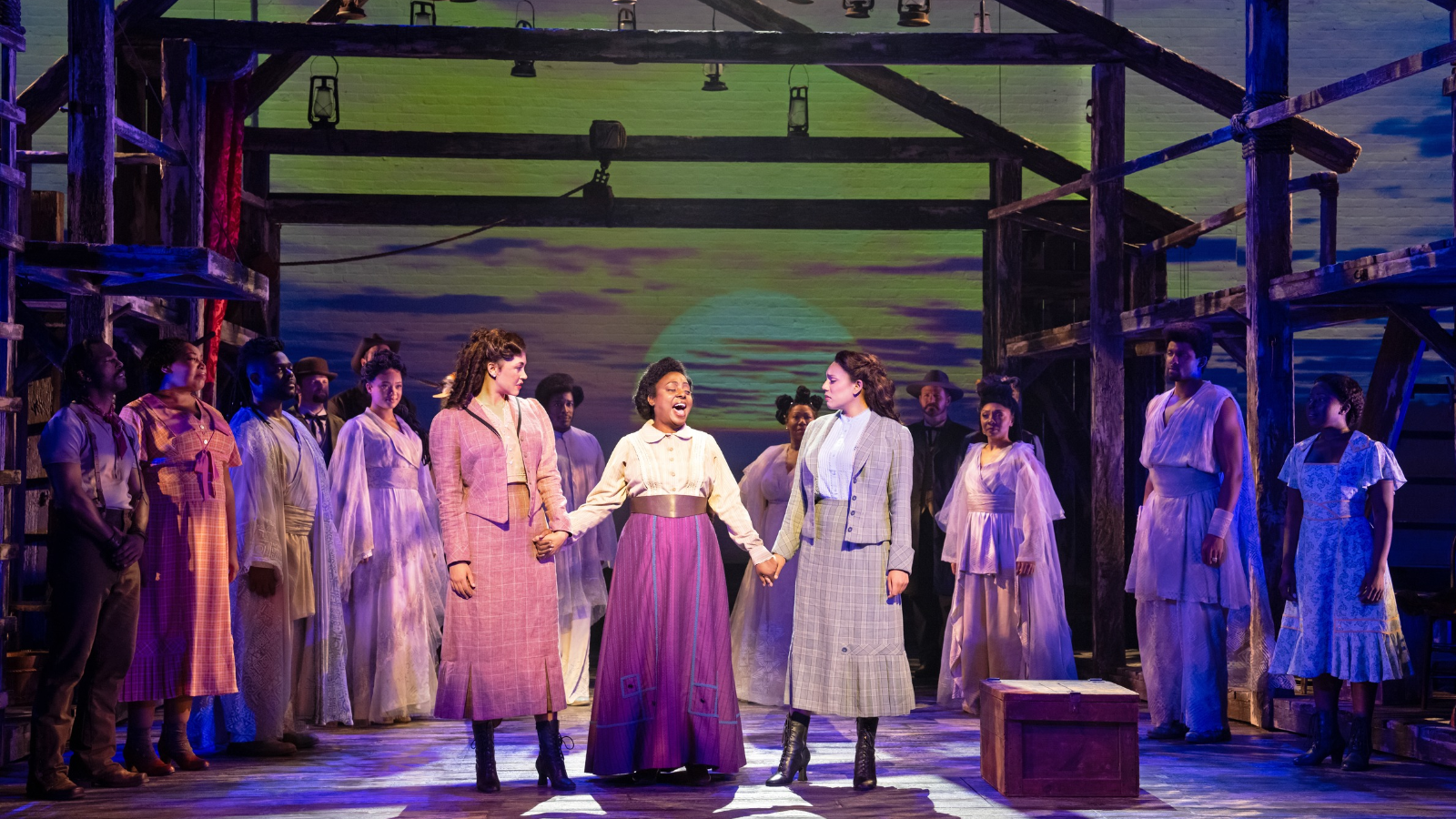
In dreaming up her new musical Wanted, which opens tonight on Broadway at the James Earl Jones Theatre, book writer and lyricist Angelica Chéri was inspired by an astonishing piece of family lore. The author’s great-great aunts Mary and Martha Clarke, two Black women who passed as white in the post-Reconstruction South, were said to have been outlaws: robbing trains, scamming white men and even killing a few (likely deserving) folks in the process.
As family legends go, no question that this one is a killer premise for a Spaghetti Western-style country musical anchored by two fiery female performers. And when Chéri and Wanted composer Ross Baum stick closely to that central concept, this ambitious original work is certainly a rollicking ride.
Sadly, the frequently disjointed final product too often feels like a victim of overdevelopment. Following a 12-year process of writing, rewriting and two out-of-town tryouts, Wanted now packs in multiple ambitious narrative goals: high-spirited western action, twin love stories, a mediation on racial assimilation and a reflection on the still-unfulfilled promise of reconstruction.
It is a lot for one musical to carry—all the more so when the authors, Chéri and Baum, are both making their Broadway debuts. In the production on stage at the Jones, one feels that strain, the struggle of an uncertain object pulled in several directions at once.
Wanted is most successful as a bitingly satirical piece. That sense of humor is best deployed in early scenes depicting the Clarke’s first outlawing efforts. The headstrong Martha (Liisi LaFontaine) and softer, more hesitant Mary (Solea Pfeiffer) practically stumble into gangster life, and both performers have great fun with these absurd early efforts. A sequence depicting the pair encountering white America for the first time and learning to imitate Southern white pleasantries is witty, surprising, and produces some of Chéri’s sharpest lyrics.
Those lyrics and Baum’s score are admirably multifaceted, shifting between country, blues, gospel and R&B. An ear worm of a former title number, “Gun & Powder” (a name that should have been retained), shakes the rafters early in the first act, thrillingly melding gospel vocals and country rock orchestrations (by John Clancy). And the ever-undersung Katie Thompson, back on Broadway where she belongs, demolishes a swinging solo that introduces us to the fine hotel where Mary and Martha ultimately land and both encounter key love interests.
One other genius injection of humor comes in the arrival of Sissy and Flo (Aurelia Williams and Awa Sal Secka, respectively), two Black servants at the hotel who clock Mary and Martha immediately. The pair’s commentary is hilariously on point, and this sharp duo steal every scene they appear in.
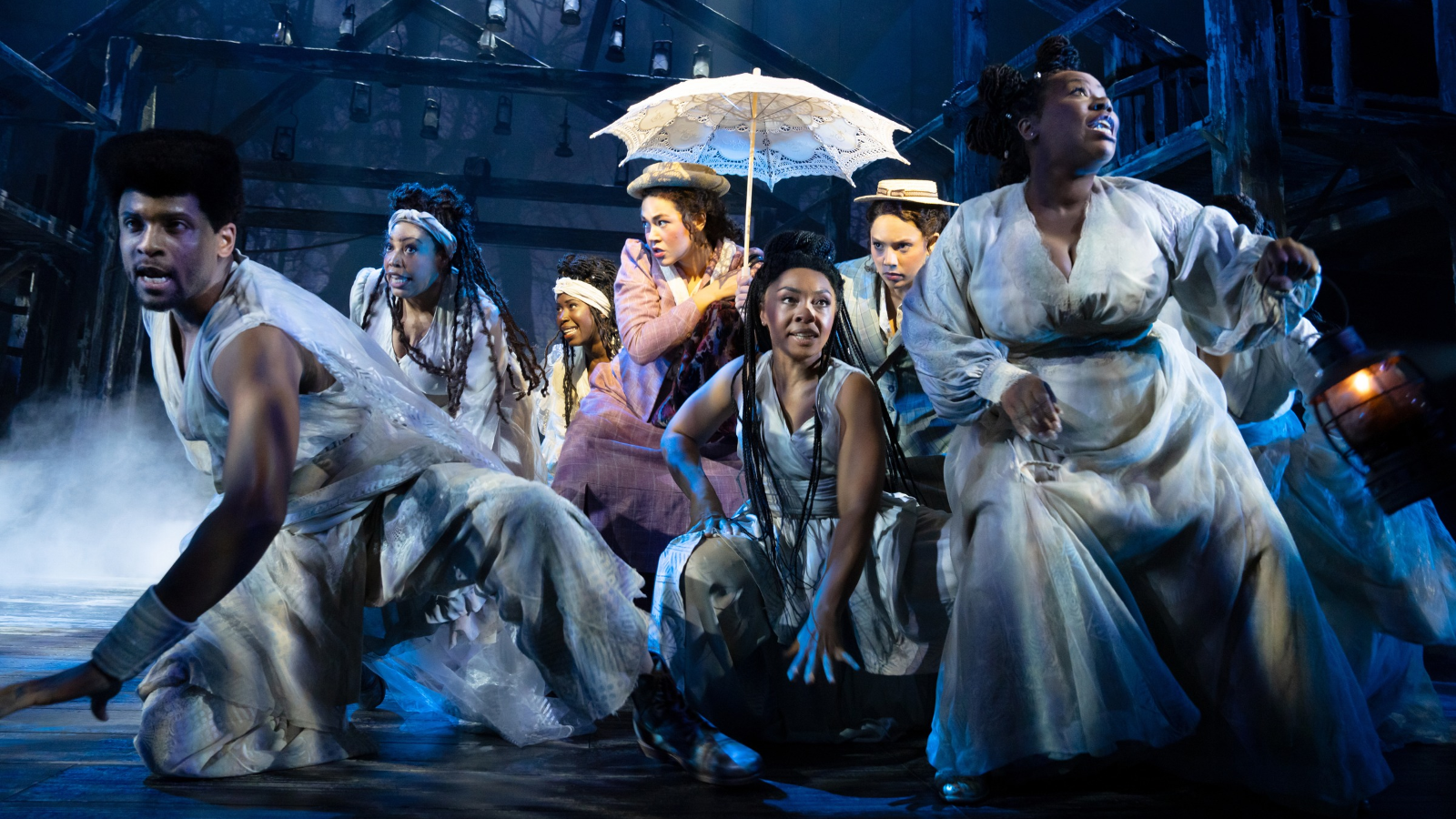
But after Wanted decides to stick around at the hotel owned by Jesse Whitewater (Bradley Jaden) and shift its focus to those two competing love stories, the show quickly runs out of steam. The realization that we’re basically done with outlaw-ing, only partway through the show’s first act, is not a welcome one. A story that desperately wants to move and keep on pressing forward is instead forcibly brought to a screeching halt.
The two men themselves are a drag, interesting as concepts but uncompelling as flesh and blood. The idea of Mary genuinely falling for white hotel owner Jesse whilst still fiercely guarding the secret of her race is an intriguing one; that she is also lured by the comforts of white life feels truthful. But Pfeiffer and Jaden find no natural chemistry, so that love is never palpable. As played by the very capable Jaden, Jesse himself is utterly devoid of charm—I fear that this performer, so excellent in this summer’s Les Misérables Arena Spectacular, was simply miscast here.
Luke James is similarly brooding as Elijah, albeit in a role where somber withdrawal makes sense. A subordinate of Jesse’s, he carries a heavy past, and opens up slowly to the steely Mary. But there is no heat between James and LaFontaine, and James’ two forgettable solos lend little texture to Elijah’s backstory. (That backstory winds up feeling, awkwardly, like a plot device more than anything else.)
Much of the narrative business of Mary and Martha’s story becomes plodding and incoherent in the show’s second act, most fatally in an unconvincing act one finale cliffhanger that proves to have no long-term significance. For much of act two, the basic geography of Mary’s location is unclear, her goals even less so; separating the two sisters for so long and feels like a fatal error, one that robs us needlessly of these two performers’ effortless chemistry.
Chéri and Baum paper over the cracks by leaning excessively on a chorus of Kinfolk, led powerfully by a roof-shattering Melody A. Betts and a magnificent Aaron Arnell Harrington. The vocal work of this six-person guiding ensemble is flawless, as is true of every single performer in this show’s powerful ensemble. But for all their soaring vocal pyrotechnics, the Kinfolk mostly feel like an unwanted distraction from Mary and Martha. It starts to feel like these sisters are not in charge of their own story.
The Kinfolk even frequently barge in to mock or make light of the latest twists in the Clarke sisters tale, one part of a tonal mishmash that director Stevie Walker-Webb cannot reconcile. Struggling to make sense of all this mess, Webb, music director Paul Byssainthe Jr. and sound designer Gareth Owens seemingly aim to overpower our senses with a pounding sound balance that frequently overwhelms Cheri’s lyrics. One yearns for this excitable and overamplified musical to slow down, calm down, and remember why its central story was worth telling.
Wanted is now in performance on Broadway at the James Earl Jones Theatre on West 48th Street. For tickets and more information, visit here.


